

Bully Pulpit
A wry and pointed take on politics, media and society from Bob Garfield. bullypulpit.substack.com
Off the Air
After nearly four decades of commentary, interviews and storytelling, Bob hangs up his headset. But because he is not yet technically dead, he gets to write his own radio obituary. Like much of his work, it’s a saga, 1400 hours rolled into 80 minutes — some of it kind of dramatic, and some just plain flabbergasting. Get full access to Bully Pulpit at bullypulpit.substack.com/subscribe
What Future?
Bob speaks to his youngest daughter about the despair of her generation. Get full access to Bully Pulpit at bullypulpit.substack.com/subscribe
May You Suffer for Your Crimes
Bob promised good faith arguments. He promised never to become “a spasm of id.” Then they massacred the children. Again. Get full access to Bully Pulpit at bullypulpit.substack.com/subscribe
Tarring the Coal
David Michael Slater has written 22 books without breaking out on the bestseller lists. His next — The Vanishing, out this fall — may increase his visibility. Get full access to Bully Pulpit at bullypulpit.substack.com/subscribe
What's Russian for 'Lie'?
We observe in horror and astonishment Putin’s poisonous, preposterous, obvious lies. But we needn’t look eastward for that. Get full access to Bully Pulpit at bullypulpit.substack.com/subscribe
Bully Pulp
Journalist Mark Leibovich has a suggestion for the craven Republicans who cower before the domineering ex-president. Get full access to Bully Pulpit at bullypulpit.substack.com/subscribe
Before Evil — Part 2: Dynamite
In the second half of their conversation about the origins of tyrants, Bob and Before Evil author Brandon Gauthier consider the immense power of ideas. Bully Pulpit with Bob Garfield is a reader-supported publication. To receive new posts and support my work, please consider becoming a free or paid subscriber. Related Episode: You May Also Be Interested In: Get full access to Bully Pulpit at bullypulpit.substack.com/subscribe
Before Evil — Part 1
Historian Brandon Gauthier looks at the lives of six murderous dictators to assess the role of childhood trauma on their adult barbarity. But he finds other, surprising influences. Bully Pulpit with Bob Garfield is a reader-supported publication. To receive new posts and support my work, please consider becoming a free or paid subscriber. You may also be interested in: Get full access to Bully Pulpit at bullypulpit.substack.com/subscribe
Listen to America
Bob splices together a soundscape of a society. And just this once, he mostly keeps his mouth shut. Get full access to Bully Pulpit at bullypulpit.substack.com/subscribe
Russian Undressing
In its horror and its rage, Western society is lashing out at anything Russian. Bob speaks to Northwestern University Professor Gary Saul Morson about cultural vigilantism. Get full access to Bully Pulpit at bullypulpit.substack.com/subscribe
The Cruelty Cult — Part 2
Bob continues his conversation with Elizabeth Williamson, author of Sandy Hook: An American Tragedy and the Battle for Truth. Get full access to Bully Pulpit at bullypulpit.substack.com/subscribe
The Cruelty Cult — Part 1
Bob speaks with Elizabeth Williamson, author of Sandy Hook: An American Tragedy and the Battle for Truth. Get full access to Bully Pulpit at bullypulpit.substack.com/subscribe
Inside Baseball
With labor catastrophe once again narrowly averted, Bob speaks to a dyed-in-the-wool free marketeer about the mysteries of the baseball economy. Get full access to Bully Pulpit at bullypulpit.substack.com/subscribe
The Age of Aquarius
Bob wonders what’s that in your hand, and why you’ve been schlepping it around with you all day. Get full access to Bully Pulpit at bullypulpit.substack.com/subscribe
Cynthia’s Ordeal
Bob speaks with writer, actor, comedian and musician Cynthia Kaplan about men, Nazis and Important People who never call back. Get full access to Bully Pulpit at bullypulpit.substack.com/subscribe
The Cosmic Lie — Part 2
In Part 1 of Bob’s conversation with New York Times global economics correspondent Peter Goodman, we learned how the world’s billionaire class rapes the world’s treasure as billions of souls can barely get by. This week, Goodman names names. Get full access to Bully Pulpit at bullypulpit.substack.com/subscribe
The Cosmic Lie — Part 1
The world’s billionaire class strong-arms governments, exploits workers, and repeatedly monetizes human crisis as it siphons off the riches of the world. On this week’s Bully Pulpit, Bob talks with New York Times global economics correspondent Peter Goodman, author of “Davos Man: How the Billionaires Devoured the World.” Get full access to Bully Pulpit at bullypulpit.substack.com/subscribe
The Many Evils of Books
A Tennessee school board voted unanimously last month to remove Art Spiegelman’s “Maus” — a Pulitzer Prize winning graphic novel about the Holocaust — from its 8th grade curriculum. Sadly, it’s not the first time a book will be banned in school and it won’t be the last. Bob talks with Professor Kathy M. Newman of Carnegie Mellon University. Get full access to Bully Pulpit at bullypulpit.substack.com/subscribe
Nobody Knows Anything, Part 2
In the second part of Bob’s conversation with author Emer Gentway, they discuss the capacity of Zen to open our minds and diminish our dangerous levels of certainty. Get full access to Bully Pulpit at bullypulpit.substack.com/subscribe
Nobody Knows Anything, Part I
Tricks of perception, mental shortcuts and a bias toward humanity limit our understanding of our universe and ourselves. Having trouble coping? It may be because you trust too much in what you believe. Get full access to Bully Pulpit at bullypulpit.substack.com/subscribe
Trained Seals in a Legal Circus
Bob examines the claim that our heroes are being forced “to choose between their God and defending our freedoms.” The only thing wrong about the accusation is … everything. Get full access to Bully Pulpit at bullypulpit.substack.com/subscribe
Carbon Assprint
In which Bob, now that he is a gentleman of a certain age facing yet another New Year, attempts a self-audit of his worthiness. It’s a journey, that’s for sure. Get full access to Bully Pulpit at bullypulpit.substack.com/subscribe
The Botched Experiment
Bob Garfield sits down with private equity tycoon and author David Rubenstein to discuss his latest book, The American Experiment: Dialogues on a Dream, consisting of interviews with scholars and other notable Americans. TEDDY ROOSEVELT: Surely, there never was a fight better worth making than the one which we are in. BOB GARFIELD: Welcome to Bully Pulpit. That was Teddy Roosevelt, I’m Bob Garfield, with Episode 23… “The Botched Experiment.” In his day job, David Rubenstein is a private equity tycoon who made his fortune buying undervalued companies, restructuring them into profitability for his investors and earning huge management fees as a steward of their stakes. The Carlyle Group, which he founded, has enriched him to the tune of $4.5 billion. Rubenstein also has many side hustles, from philanthropy to amateur historian to T.V. interviewer of the rich and powerful. In these excerpts from Bloomberg T.V. we hear George W. Bush and Oprah Winfrey. RUBENSTEIN: Over much of the past three decades I’ve been an investor, the highest calling of mankind, I’ve often thought, was private equity, and then I started interviewing. GEORGE W. BUSH: (laughs) RUBENSTEIN: When I watch your interviews I know how to do some interviewing. OPRAH: (laughs) His conversations with cultural, political and business icons have been edited into two books, the latest being The American Experiment: Dialogues on a Dream. Collected within are conversations with the likes of Madeline Albright, Ken Burns, Henry Louis Gates Jr. Wynton Marsalis and Billie Jean King. While acknowledging inequities and fault lines in our society, these conversations are in all a celebration of the so-called “American experiment,” which Rubenstein compares to the unique assortment of genes that determine the nature of the societal organism. Had they not converged, he says, “we would not be who we are, we would not be who we are. Rubenstein joins me now. David, welcome to Bully Pulpit. RUBENSTEIN: My pleasure to be here. Thank you for having me. GARFIELD: Your book takes these 13 genes and kind of divides them up among various scholars and cultural icons. What's on the list? RUBENSTEIN:Well, the genes are ones like the belief in the democracy, the belief in the importance of voting rights, the importance of of things like the military should not be in control of the civilian government, the civilians should control the military, the belief in the importance of diversity and importance of the belief in and then having elections and the right to vote. Those are the kind of things I think are parts of our culture; now, increasingly, the belief in diversity is a very important part of our culture, and the belief in the American dream is an important part of our culture. GARFIELD: I want to begin, as you do in the book with the Democracy Gene and your conversation with Harvard professor Harvard Professor Jill Lepore, author of the staggering 900 page survey of American democracy, titled These Truths. She has two insights which blew me away. One was the democratizing role of permitting personal bankruptcies, non-corporate bankruptcies — which was unknown to the world — and which played out as a safety net for entrepreneurial risk. Right in your wheelhouse, that one. RUBENSTEIN:Yes, her point is that when individuals couldn't pay their debts before they were put in jail as opposed to be allowed to be bankrupt, and that the fact that that was changed was an incentive for people to try to take greater risks than they might have taken before. So, yes, it's a very good point that she made. GARFIELD: Yeah, freedom of religion it ain't, but has taken an outsized role in the development of the democracy, but also the American form of capitalism. RUBENSTEIN: That's correct. You know, remember in our country we started, which started for religious freedom, but only to make sure that people could worship the way that those people wanted to worship. The Puritans and pilgrims didn't really want people to worship any way other than theirs. Now we have a system where people can worship the way they want it. But our Founding Fathers honestly didn't believe so much in the idea that you could worship any religion you wanted. GARFIELD: Yeah. Hold that thought because we will return to it. Lepore’s second poignant observation was the grotesque collateral damage of the victorious American Revolution and that damage being the perpetuation of slavery, which the British had vowed to abolish. Instead, slavery and its associated injustices have been with us now for 400 years. You used the term original sin. Now, at least in Catholic doctrine, that is something inherent that permanently corrupts our nature, and it has sure done that, slavery has. Now you are in the valuation racket. Was the independence from Britain worth the incalculable human cost? RUBENSTEIN: Well, counterfactuals and history are always difficult to come up with and give definitive answers. I think they — if we had not won the Revolutionary War, I suspect we would have become like Canada, a member of the Commonwealth of Britain, and basically had pretty much the country we've had. But I think that the British probably would have ended slavery quicker than we did, though, because Britain had ended slavery in its country before. But I don't know that it was going to be that easy to end slavery that quickly in the 1700s; the economy of the South increasingly depended on it. GARFIELD All right. So if the slave trade was, as you put it, our original sin, after 150 years came the the bloodbath of the Civil War and after that, the reconstruction of the South, brief, as it was. You spoke to Harvard scholar Henry Louis Gates, Jr., about the ruinous backlash to reconstruction from the infamous compromise of 1877 that effectively obliterated reconstruction and laid the foundation for Jim Crow and white supremacy to the retrograde Plessy v. Ferguson “separate but equal” decision. Gates also told you something I'd never heard of that, the newly restored white power structure called itself “Redemption” — that was how they described the the end of reconstruction. It occurs to me that maybe this foreshadows today's Christian Right using biblical text to whitewash what to my eyes are obscene ideas. With redemption like that, who needs sin? RUBENSTEIN: Well, the redemption that he was referring to was basically the belief that they had restored the white order that had existed before the Civil War. Their so-called lost cause of those in the South was what they believed in, that they had a cause — not to preserve slavery, that was what they were saying they weren't fighting for as much as preserving the southern way of life. But in the end, it was really to preserve slavery. But they believed that they were restoring the original sin or restoring the Southern Order was what redemption was all about. GARFIELD: Now, since the end of World War Two, there have been acts of legislation and judicial decisions now enshrined in law — the principles of the founding documents codified: women's suffrage, desegregation, the Miranda decision about the rights of the accused criminals, removing prayer from public schools, marriage equality and so on, as the United States followed a general Western path towards liberal democracy. These very advances have infuriated conservatives for 60, 70 years, because they believe that their values and their hegemony are under attack. Make America Great Again seems to share a viewpoint with Redemption. Which country are we, do you think? Are we open hearts or are we closed minds? RUBENSTEIN: Well, that's a difficult question to answer. I would say that the beginning, the rhetoric, of the Founding Fathers was wonderful: all men are created equal. But as we all know, we had slavery; we didn't allow women to have certain rights, including the right to vote; so we've been trying to live up to the rhetoric over the 250 years, and we still have a long way to go. Many pe… Get full access to Bully Pulpit at bullypulpit.substack.com/subscribe
Live From the War on Christmas
SPECIAL WAR BULLETIN 24 DEC 2021 Not since Edward R. Murrow has a reporter so bravely brought home the terrible soundscape of war. Happy New Year! In the warm and generous spirit of the holidays, we’re offering 30% off a subscription to Booksmart Studios until the end of the year. You’ll get extra written content and access to bonus segments and written transcripts like this one. More importantly, you’ll be championing all the work we do here. Become a member of Booksmart Studios today. Thank you for your support. * TRANSCRIPT * TEDDY ROOSEVELT: Surely, there never was a fight better worth making than the one which we are in. GARFIELD: Welcome to Bully Pulpit. That was Teddy Roosevelt. I’m Bob Garfield with Episode 22: Live from the War on Christmas. [RADIO STATIC] ANNOUNCER: Ladies and gentlemen, we interrupt this program to bring you a special report. Bully Pulpit’s Bob Garfield is on the battle lines of a terrible conflict, which is setting the world afire. In the midst of the mad fray, without care for his own safety, Mr. Garfield recounts the sights and sounds of war. We now take you to the North Pole. [THE SOUNDS OF WAR] GARFIELD: This is the North Pole. Last night, some young reindeer fetched me here. These heroes, Dasher, Dancer, Prancer, Vixen, Comet, Cupid and — with grim and fantastic irony — Donner and Blitzen, describing the very scene that in this benighted duchy now unfolds. The pilot on our journey was called Rudolph, his caribou nose casting light through the smoke and darkness. The team was determined, for here resides the greatest center of holiday production. The shooting of cannon and ack-ack guns, the shrill roar of a diving airship, fills the night with a deathly din. A reporter cannot help but cower in the ruins. The secular humanists, in league with communists and cosmopolitans, are upon us. These are the sounds of the war on Christmas. From my icy shelter (the frozen remnants of a leveled doll factory) the fury seems fantastical. The insurgency began only 13 years ago, in what seemed to be flailing propaganda against a dubious oppression. This is when America first heard from the defenders of Jesus Christ about the godless machinations of the Macy’s department store. BILL O’REILLY: This year they are touting Santa Claus who will help you “with your holiday wishlist.” So here’s my question to Macy’s: What holiday is Santa celebrating? The winter solstice? The birthday of a reindeer? What? GARFIELD: That lowly broadcaster, whose name is now lost to history, used his bully pulpit to speak of conspiracy against not just a persecuted religious minority, but a way of life. O’REILLY: Everything was swell up until about 10 years ago when creeping secularism and pressure groups like the ACLU began attacking the Christmas holiday. They demanded, demanded the word “Christmas” be removed from advertising and public displays, and many people caved into that. GARFIELD: It all began in a series of small partisan skirmishes O’REILLY: I’m like a guerilla fighter in the war on Christmas. You know what I do? I put little shepherds right in front of city hall in my town. Or if I know that there’s a secular person in my town or the town neighboring me, I’ll put a little baby Jesus on their windshield. GARFIELD: For years he would strike small blows against the Godless conspiracy, then melt away to his sacred country club. But like all guerilla fighters, armed with little but his half wits and audience of seething nativists 5 million strong, he incited rage against the false prophets of basic respect. In time, he would all but vanish from the fight. Smeared by the secularists for merely trying to spill his heroic seed wantonly among the faithful, he retired to a life of falafel and shame. Still the movement grew and grew, gathering the momentum history rewards for the zeal of the righteous. From fellow broadcasters… GRETCHEN CARLSON: I am tolerant! I’m all for free speech and free rights, just not on December 25th! GARFIELD: …to more fellow broadcasters… SEAN HANNITY: Welcome to Hannity. The War on Christmas is upon us again. GARFIELD: …to the emotionally-disturbed imbecile aspiring-dictator community. TRUMP: And speaking of Christmas, you're gonna be saying “Merry Christmas” again, okay? You’re gonna say “Merry Christmas.” GARFIELD: Suddenly the dirty gray clouds turn white and the advance grows merciless. The Jews and Muslims and Satanists pour through the outer searchlight defenses. Aloft, a flying machine tumbles toward the pole, ablaze. It is a great, golden, slow-moving meteor slanting earthward. Yellow flares shoot up in bright relief, revealing the airship to be a sleigh, whose desperate escape has been foiled in a hail of flak. The pilot, intrepid Rudolph, with his shiny nose, lights the spiraling path to oblivion. What I am witnessing is a calculated, remorseless campaign of destruction. Now the little men, brave bantams one and all, are ragged and shivering in the final battle wondering what is it all for. They are but elves, laboring amid the chaos to meet quota. Moments ago, just as a projectile burst in the sky, I witnessed a little gnome utter his last words. In the strange argot of these industrious pixies, and in a squeaky impish voice, he declaimed: “FML. We have product to turn around.” And then he fell, his slippered toes curled toward the blazing heavens. [RADIO STATIC] ANNOUNCER: You have been listening to Bob Garfield in an eyewitness report of his experiences at the North Pole. Now I see we have received a telegraphed dispatch from Mr. Garfield. I quote directly from his wire: “The North Pole has not fallen. Repeat: not fallen. [stop] “The advancing cosmopolitans were not waging war against Christmas. [stop] “It appears to have been some sort of celebration, with fireworks, in the spirit of seasonal good tidings that grace the world. The war on Christmas, it must now be reported, is a figment, neither waged nor declared. [stop] “Perhaps I was feverish with Omicron, or brainwashed, but assessing the aftermath what I have discovered is evidence only of a very big party. [stop] “No elves have died. The casualties were limited to an Amazon warehouse, where some workers simply collapsed from exhaustion. [stop] “Christmas is alive and unmolested the world over. The birth of Jesus Christ is on the lips of billions. [CHURCH BELLS] “I can hear the bells. I can hear the bells. [stop]” GARFIELD: All right, we’re done here. Bully Pulpit is produced by Matthew Schwartz and Mike Vuolo. Our theme was composed by Julie Miller and the team at Harvest Creative Services in Lansing, Michigan. Bully Pulpit is a production of BooksmartStudios.org. I’m Bob Garfield. Merry Christmas. TRUMP: They are saying “Merry Christmas” again, we got that. That was a big part of what I was doing. I would say it all the time during that period, that we want them to say “Merry Christmas,” don’t shop at stores that don’t say “Merry Christmas,” and I’ll tell you what, we brought it back very quickly. Get full access to Bully Pulpit at bullypulpit.substack.com/subscribe
The 60-Year Coup, Part 2
Part 2 of Bob’s conversation with author Anne Nelson about the Council for National Policy, which has spent decades exploiting bugs in the system to gain minority control of our politics — and our future. * TRANSCRIPT * TEDDY ROOSEVELT: Surely, there never was a fight better worth making than the one in which we are in. GARFIELD: Welcome to Bully Pulpit. That was Teddy Roosevelt, I'm Bob Garfield. With Episode 21, “The 60 Year Coup: Part Two.” DONALD TRUMP: Together, we're committed to protecting the American people, preserving American values, defending America's heritage, and keeping America safe, strong, prosperous, and free. GARFIELD: That was Donald Trump, hat in tiny hand, singing for his supper before the Council for Domestic Policy, the umbrella group of evangelical Christians and big energy interests, that for decades has been the patient and ruthless architect of the great right wing conspiracy. In last week's episode I spoke to Anne Nelson, research scholar at the School of International and Public Affairs at Columbia University, and author of Shadow Network: Media Money and the Secret Hub of the Radical Right. In part two of our conversation, we'll consider the powerful synergy of CNP and a pathological demagog and the destruction that that synergy wrought. Anne, welcome back. NELSON: Thank you. GARFIELD: All right. Let's now turn to the more-or-less present: the rise of Trump and the now violent assault on democracy. How was CNP involved in Trump's ascent? NELSON: The CNP was involved with Trump, initially, very reluctantly. He wasn't one of them, he had no particular religious background, he was multiply divorced, and he really didn't reflect their values in many ways. Their favored candidate was Ted Cruz, but they had a problem - which was that Cruz had a tremendous charisma deficit, and as he lost the primaries, they realized that either they supported Trump, the primary victor, or they lived with Hillary Clinton's presidency, which was unacceptable to them. GARFIELD: Oh, I - I'm sorry, I just - I just have to interrupt to remind you what then Senator Al Franken (laughs) said about Cruz. AL FRANKEN: I probably like him more than most of my other colleagues like Ted, and I hate him (laughs). NELSON: That is the case. Cruz is a formidable intelligence and strategist. He was not a winning candidate outside Texas. So the fundamentalists convened something, like, a thousand leaders and representatives in New York City in June of 2016 at the Times Square Marriott. They brought Trump out to parade him before them, and they had a number of leaders from the Council for National Policy there on the program. And publicly, what that event was about was to sell Trump to this thousand fundamentalist leaders, many of whom had been Never Trumpers, and they were like, “This is going to be your guy. You need to go home and tell your flocks that this is the plan.” But the second part of that agenda involved meetings where they cut a deal with Trump. They said, “You don't have a war chest, you don't have ground troops for the election canvassing, you don't have a strategy. And all indications are you're going to get creamed.” So we have all three of those that we can put into your service. But in return - GARFIELD: We have a shopping list. NELSON: We have a shopping list, and it's basically got three items. The first one was enact some of our policies by executive orders. So when suddenly the Republican platform has this new anti-trans, anti LGBT language that was literally written by the president of the Council for National Policy, Tony Perkins, Trump enacted the anti-trans policy for the Pentagon against the Pentagon's wishes, which, you know, the Pentagon said, “This is disruptive of our operations and trans people are not a problem,” but Trump had to deliver on his deal. The second part was to create an evangelical advisory council. Obama had a religious advisory council, but it included Catholics, Protestants, Jews, Muslims. This one was 100% Protestant, and none of these other religions needed to apply. The leadership of this council were in and out of the White House on policy discussions and photo ops on a weekly basis. The third was by far the most important, far reaching, and devastating to our democracy. And that was when they got Trump to agree that any federal judges he nominated would be approved from a list that was submitted by three organizations run by members of the Council for National Policy. These were the Federalist Society, the Heritage Foundation, and the National Rifle Association. Now, what business the NRA has in recommending federal judge nominations? I do not know, but that's how it played out, and after his first confirmation, he invited the representatives of these groups, most of them from the Council for National Policy, for a little victory luncheon at the White House. GARFIELD: So that was the origin story of Trump's deal with the devil, a man with not only no religion, but no ideology to speak of creating himself in the image of his political and financial sponsors. Over the ensuing - well, so then he was elected, more or less - and then over the ensuing four years, many of Trump's 30,000 lies, big and small, find their provenance, what do you know, in the CNP. So, can we just tick a few of these off beginning with the COVID hoax, and the savior drug hydroxychloroquine? NELSON: So if you get to the beginning of 2020, the Trump campaign is in trouble and the Council for National Policy recognizes it. They had hoped that the 2020 elections would be won with a popular vote, that was cast into doubt. COVID set in a couple of months later, and the whole strategy of the Trump campaign had been built around mass rallies and data harvesting from attendees of the rallies and building on that to secure a victory. Well, mass rallies became impossible because of COVID restrictions, so there was a critical phone call that involved the president of the Council for National Policy and members of the Trump campaign staff, where they said, “We need to open up society, get the economy roaring again, and people are afraid of COVID, but they trust doctors. We have a group of doctors who will say that COVID is a hoax, will argue for the reopening of society and the mass rallies.” So that summer, these doctors were convened by Jenny Beth Martin in Washington. Jenny Beth Martin, co-founder of Tea Party Patriots and a leading figure in the Council for National Policy. At that point, the point person - when Dr. Simone Gold announced that hydroxychloroquine was a cure for COVID - she was put on partner media platforms of the CNP, including the Charlie Kirk Show and the Christian Broadcasting Network, spreading this disinformation SIMONE GOLD: With the tyranny of medical apartheid nipping at our heels, rise up. Rise up. Rise up. NELSON: And that has now expanded into a small army of unethical physicians who are continuing the hydroxychloroquine hoax. They've added ivermectin as a cure and, in fact, they have online prescription services charging money to people who are ordering ivermectin as a COVID cure. JAKE TAPPER: Poison control centers are reporting that their calls are spiking in places like Mississippi and Oklahoma because some Americans are trying to use an anti parasite horse drug called ivermectin to treat coronavirus, to prevent contracting coronavirus. What would you tell someone who is considering taking that drug? FAUCI: Don't do it. NELSON: There's no evidence that it helps against COVID and, in fact, there are several cases of deaths. Not just from COVID and the failed approach of ivermectin, but people taking overdoses of ivermectin. At the same time, they're discouraging vaccination, and the purpose that lies behind this is, I believe, to discredit any federal agency, to discredit the CDC and the NIH, and to have their followers distrust any kind of fact based authority. Whether it's science, whether it's professional journalism, whether i… Get full access to Bully Pulpit at bullypulpit.substack.com/subscribe
The 60-Year Coup, Part 1
Bob speaks with author Anne Nelson about the Council for National Policy, which has spent decades exploiting bugs in America’s system of democracy to gain minority control of our politics... and our future. Get full access to Bully Pulpit at bullypulpit.substack.com/subscribe
Evidently, You *Can* Go Home Again
Once upon a time, Bully Pulpit’s Bob Garfield played the role of amateur linguist on a delightful show called Lexicon Valley. Today, to celebrate the re-release of ten vintage Lexicon Valley episodes — remastered and ad-free — Bob and Mike Vuolo bring you a special reunion episode filled with banter, history, poignant father-son moments and quite a number of words. Are you happy now? This week only, you can get a subscription to Booksmart Studios for just $4.90/month, or $49/year. As a subscriber you’ll get extra content, including bonus segments, access to full written columns, and all the remastered Lexicon Valley originals. Become a supporter today. Get full access to Bully Pulpit at bullypulpit.substack.com/subscribe
The Gospel of Christie
How do you get the media to be your confederates in a phony redemption story? Criticize Trump, no matter how transparent your hypocrisy. Get full access to Bully Pulpit at bullypulpit.substack.com/subscribe
Madison Avenue Thinks You're Stupid
Guided by the Rule of Three, Bob demonstrates that the age when marketers start infantilizing you is going down, down, down. Get full access to Bully Pulpit at bullypulpit.substack.com/subscribe
Everything You Always Wanted to Know About Leptons But Were Too Afraid to Ask — Part II
In Part I, CERN physicist Steven Goldfarb attempted to explain to Bob the difference between leptons, muons, and quarks. In Part II, Goldfarb tackles a thornier question: In this age of so much disinformation, when scientific fact seems to carry no more weight than opinion, does science even matter? Plus: A very special epilogue. Get full access to Bully Pulpit at bullypulpit.substack.com/subscribe
Everything You Always Wanted to Know About Leptons But Were Too Afraid to Ask — Part I
Do you know what a lepton is? A muon? A quark? A boson? Bob can’t even grasp the Facebook terms of service, but he found a particle physicist who both understands the nature of matter and was willing to explain it to him. Or try, anyway. Joining Bob for the first of a two-part conversation is Steven Goldfarb, a physicist at the University of Melbourne working on the ATLAS Experiment at CERN — the European particle physics consortium that operates the world’s biggest particle accelerator near Geneva, Switzerland. Get full access to Bully Pulpit at bullypulpit.substack.com/subscribe
Shopping for a Foxtrap, Part II
Bob has rethought his First Amendment absolutism, and challenges a legal scholar to do the same. Listen as Dean Lyrissa Lidsky of the University of Missouri School of Law somehow fails to bend to Bob’s will. Get full access to Bully Pulpit at bullypulpit.substack.com/subscribe
Shopping for a Foxtrap
Bob thinks the repeated chicanery, misrepresentation and outright lies of the self-proclaimed “news” channel might offer an opportunity for prosecution or litigation under RICO — a.k.a. the Racketeer Influenced and Corrupt Organizations Act. After saying so on social media, and being ridiculed for his naïveté, Bob takes the question to experts. Get full access to Bully Pulpit at bullypulpit.substack.com/subscribe
Alec Baldwin is Everywhere
In this unholy amalgamation of interview and free-form kibbitz between two cranky former employees of WNYC, Bob Garfield and Alec Baldwin discuss life, acting, and the great Stockton Briggle. Plus, find out more about Bob’s split with “On the Media.” TRANSCRIPT: TEDDY ROOSEVELT: Surely there never was a fight better worth making than the one which we are in. BOB GARFIELD: Welcome to Bully Pulpit. That was Teddy Roosevelt. I’m Bob Garfield with Episode 12: Alec Baldwin Is Everywhere (Including Here, Right Now). ALEC BALDWIN: I'm a game show host. I'm a podcast host. I'm a father of seven children. I'm out of my mind.... GARFIELD: ..and see what I mean? That’s him, star of stage, screen, Page 6, iHeart Radio, and, in this case, Instagram Live, where he appears once a week for his 2.1 million followers in conversation with actors, musicians, and at least one dashing, elderly podcaster. Why? Because he graciously wanted to call attention to this show. It was something of an interview, something of a promo appearance, and something of a free-form kibbitz between two cranky former employees of WNYC radio in New York City. I warn you, like other friendly conversations you’ve overheard, it comes with a lot of random digressions. BALDWIN: I'm here with the one and the only Bob Garfield to talk about his new show, Bully Pulpit, to talk about his career in journalism (his long and wonderful career as a journalist), to talk about the fate of journalism. We might talk about that for like 60 seconds, because what's the point? But first of all, Bob, tell me, you left public radio--you were on public radio for quite a while. On the Media, wonderful show. Of course, I'm obviously a fan of yours, a huge fan of yours. But when you left there, talk about the genesis of Bully Pulpit, how did that come together? GARFIELD: Well, first of all, I left there the way an artillery shell leaves a cannon. I was fired. And you know, we can get into that a little bit. The lawyers prevent me from being, you know, too candid. But yeah, we can talk about that. Can we just observe one thing, since this conversation is taking place the day after the Facebook shut down and the Instagram shut down and two days after this blockbuster interview on 60 Minutes with the whistleblower? We are on Instagram, which we now well understand triggers self-loathing in kids, right? Because, you know, Mark Zuckerberg, if we're talking like evil, he makes Vladimir Putin look like Mr. Rogers. So I guess what I'm saying is, kids, please love yourself and we love you too. That's where I want to start. I apologize for talking to you, Alec, on this particular platform because evil. BALDWIN: [coughing] I’m choking. GARFIELD: I know, it was poignant. I understand. BALDWIN: It's very moving. [coughing] GARFIELD: You know, if that were in a movie (that little episode), in 12 minutes, you would die of consumption. BALDWIN: Well, someone wrote “Trump 2024,” so I immediately started convulsing. GARFIELD: [laughs] BALDWIN: Well, listen, I am someone who Instagram is my primary, if not sole social media source. I have a Twitter account which I keep open just as a placeholder for my name. Facebook--I have a Facebook page for myself, for my foundation. My wife and I have a charitable foundation. We have a Facebook page for that. But Instagram is it for me. And I guess Instagram is owned by Facebook, correct? GARFIELD: It is. And you know, obviously it's a fantastic utility, but it is both utopian and dystopian, and the dystopian side is really dystopian. I mean that because Mark Zuckerberg and company know exactly what the deleterious effects are of the social dynamic on these platforms, and they will not do anything to remediate them because it screws up their business model. So they are constantly apologizing and explaining and being on the defensive, but they never actually fix what’s broke. So, nonetheless, like I said, really good utility, and I'm delighted, de-freaking-lighted, to be talking to you on this or anywhere because I'm always delighted talking to you. BALDWIN: Well, thank you. Now a guy who shall remain nameless contacted me quite a while ago, probably last year in the heart of the first waves of the COVID (probably more than a year ago), to talk about a more user friendly platform. Like this with more integrity. Everybody’d have to register. You’d have to give all your real information. You’d have to give a photograph. You'd have to be completely transparent. It's you as you, being you, doing you, posting as you. The question, of course, is how many people really, really want that? Or do most people really kind of like the way it is, where you can hide and you can conceal yourself and say just hateful things? GARFIELD: Well, it’s a playground for the id, right? And it, you know, it empowers you to have power, even if it's only the power to intimidate or to terrorize or to bad mouth. And, you know, it taps into something that unfortunately is all too human. BALDWIN: Yeah. GARFIELD: Can I say one other thing, Alec? This is so weird. I'm sitting here looking at your face because Instagram, right? So, last night I was watching the Jerry Lewis documentary, which popped up on Amazon Prime, and there you were. A couple of weeks ago, I was watching the John DeLorean docu-drama-- FRAMING JOHN DELOREAN CLIP: I’m gonna try to be DeLorean. GARFIELD: --and there you were, not only as DeLorean, but as yourself commenting on the DeLorean saga. I just watched you in the mini-series, (I think on Peacock), Dr. Death-- DR. DEATH CLIP: Duntsch is never going to stop on his own. GARFIELD: --which is a really, really, really perverse story. And I watch you every week on the Match Game. MATCH GAME CLIP: We’re looking for….penis. GARFIELD: Well, OK, that's actually not true, I don't watch the Match Game. But Alec, I'm afraid to open the f*****g fridge because I think you're going to be in there like drinking my orange juice from the carton. BALDWIN: There I am on the missing — I'm missing on the carton. GARFIELD: I don't understand. You've got between like 6 and 47 kids. How do you have the time to be everywhere all at once? I don't understand this. BALDWIN: I wish that were true. But Peacock--we started Dr. Death in March of last year. They shut down. They came back and were rebooted and ready to go with all of their protocols by mid-October. We shot from mid-October to the end of like, I think middle or end of February, you know, because we have the holidays. It was like a almost five month shoot to do eight episodes because of all the shutdowns and protocols. But it was a group of people--what you see very often in the business now is how hard people are working to keep everything going. They don't want to be the one that shuts down the production. They don't want to be the one that brings the COVID on the set. They’re working really, really hard--like my kids’ school. When you go to my kids’ school and we drop them off at school, everyone's working really hard, masking, gloves, spraying things down, and distancing. And everybody on the staff is vaccinated. Everybody on the faculty is vaccinated. And I would imagine most of the parents are vaccinated as well, and we're assiduous about all of this because the kids can't be vaccinated yet. So we're always trying to protect unvaccinated children. So the job I did with Peacock (and my part was rather small. I mean, the real star of it was Joshua Jackson--played the eponymous character, if you will.) GARFIELD: Very well. He does a sociopath very, very well, that guy. BALDWIN: Wonderful performance. And so, everybody worked really hard to protect everything COVID-wise. I'm leaving to go to New Mexico in a little while to go shoot a film very quickly, and that's the same thing. Everyone just busting their back to keep everything safe for everybody. GARFIELD: A Western, by the way. BALDWIN: Yes, I'm going to do a Western. GARFIELD: Is this your first Western? BALDWIN: I actually did--the producer w… Get full access to Bully Pulpit at bullypulpit.substack.com/subscribe
The Tortilla Scandal
Bob stumbles on a controversy about a media personality’s enchilada recipe — and learns about truth, celebrity and Mexican food. TEDDY ROOSEVELT: Surely there never was a fight better worth making than the one which we are in. BOB GARFIELD: Welcome to Bully Pulpit. That was Teddy Roosevelt. I’m Bob Garfield with Episode 11: The Tortilla Scandal. Gotta tell you, this one is hard. Look, I think it’s fair to say that in 44 years of journalism, I haven’t shied away from difficult subjects — because that’s what we do, right? That’s why we are here, to shine light into some dark corners. Sometimes dark and damp. The kind of fetid hiding places where bad things happen out of public view. Unseen crevices, shadowy and, you know, moist. But journalism is all about venturing there, risks be damned, to protect the public’s right to know. I’m looking at you, Armando Tinoco of Showbiz Cheat Sheet. He is the author of the blockbuster story headlined “‘Magnolia Table’: Joanna Gaines Makes ‘Controversial’ Substitute in Mexican Enchilada Recipe.” JOANNA GAINES: So I’ve got my 9x13 pan, and I’m going to put about half a cup of the enchilada sauce at the bottom. GARFIELD: The Magnolia Table episode starts out normally. As the old saying goes, “You can’t make enchiladas if you’re not willing to make enchilada sauce.” And the host, Joanna Gaines, for a while says and does nothing that would suggest controversy. GAINES: So, I’m going to add the shredded rotisserie chicken and then I like to add some mozzarella cheese. It’s a nice go-to, safe recipe that everyone will love. GARFIELD: OK, trigger warning. I’m not going to show you this, because we have some technical problems with our video, but it turns out not to matter what Gaines says about “safe” and “everyone will love,” because pictures don’t lie. She is wrapping her enchiladas in wheat-flour tortillas. It’s like watching police body-cam video. And there were some in the audience who were all, like, am I really seeing this? MATTHEW McCONAUGHEY: Holy...f*****g s**t. GARFIELD: You can say that again, Matthew McConaughey, maybe even slower. Because Gaines totally courts the inevitable backlash, openly declaring, and I quote: “I grabbed a handful of fresh tortillas from Jesse’s today. In traditional enchiladas, sometimes it’s corn tortillas, but I like to use flour tortillas and it’s quite controversial.” “Controversial,” she says. No wonder she got the attention of Showbiz Cheat Sheet, which zeroed right in (I mean, if we’re to credit the headline) on this potential crime against humanity — like genocide, or cinnamon-raisin bagels. Is God okay with tortillas not made with corn? YEAH YEAH YEAHS: (Music) It's sacrilege, sacrilege, sacrilege, you say… It's sacrilege, sacrilege, sacrilege, you say… GARFIELD: This is precisely the matter explored by food vlogger Adam Ragusea, who painstakingly documented the relationship between white flour and white people. ADAM RAGUSEA: The soft-shell corn tortilla is the original tortilla, originating in pre-Columbian America. Wheat didn’t even grow in this hemisphere until European colonialists brought it over. GARFIELD: I’ll return to Adam in a moment. Because in media, controversy is a commodity and you really, really need to inspect the goods. For now though, let’s focus on another important question: Joanna Gaines, the enchilada lover — who is she again? Well, here’s who: a famous American. A cable-TV-famous, unthreateningly attractive, very white-teethed American, who, with her even more white-teethed husband Chip, were for five years hosts of HGTV’s super popular home-renovation-porn show Fixer Upper. SNEAK PEEK OF FIXER UPPER EXCERPTS: “Lucas and Laney, today is the big day. Are you ready to see your fixer upper?”“Absolutely.”“Let’s do it!”“OH MY!”“This kitchen…”“How did you do this?”“Ta-da!” GARFIELD: The show was a blockbuster, but is just ending a three-year hiatus while Joanna and Chip spent more time with their five kids, their lawyers, and their very own fledgling cable channel Magnolia Network, where, at the moment, Jo doesn’t renovate old farm houses but cooks meals on TV. Yes, she is now a DIY celebrity chef, and as such, what she does with an enchilada matters. Ok, not “matters,” as in having any relevance to anyone’s real life in this particular solar system. “Matters” as in feeding the industry built on the passing interest of many, many TV consumers who may or may not be up to speed on, say, the systematic erosion of voting rights for Black Americans or atrocities in Myanmar or the burning of our planet to a cinder, but definitely do feel a kinship with Jo and Chip, becausetelevision. In that universe, not only can Armando Tinoco gain employment writing about the tortilla ingredients of the rich and famous, but everything Joanna Gaines does (with the possible exception of her autonomic nervous system) is also newsworthy. I commend you, for example, to Rachel Askinasi’s scoop for Insider headlined: “I Tried Joanna Gaines' Restaurant-worthy, Cereal-coated French Toast and It's Perfect for Family Brunch.” Pulitzer committee, take note. But the journalistic interest extends beyond Joanna herself to those with whom she shares DNA. Credit Nathalie Kirby of House Beautiful for ferreting out the story headlined: “Joanna Gaines's Younger Sister Just Opened a Plant Shop Called ‘Ferny's’ and We Can't Wait to Shop There!” These exposés don’t just land in a reporter's lap. Breaking this news required Kirby to roll up her sleeves and read Joanna Gaines’s Instagram, which gushed about both Ferny’s and sister Mary Kay — approximately like the Pentagon papers, if the Pentagon Papers had included an address and store hours. It is journalistic enterprise like this that keeps you and me free. Because We. Must. Know. More. I mean, Chip and Joanna’s infidelity issues, don’t even get me started. Access Live was all over Chip, and we are the better for it. INTERVIEWER: I’m thinking about your 18th wedding anniversary, the five kids, all the success, all the fame that’s come. Has there ever been a moment for the two of you where you thought you were going to throw in the towel or that you couldn’t do it? CHIP GAINES: You know, that crisis, Jo and I had multiple opportunities to quit and throw in the towel, and that was just not in our DNA. So now I think we’ve taken that and realized that, you know, it’s like you can’t ever lose if you don’t quit. And Jo and I keep showing up day after day and sometimes it’s right, sometimes it’s not, but we keep putting one foot in front of the other. INTERVIEWER: Joanna, tell me about the engagement ring. GARFIELD: Now, amid all of this repertorial heroism, there is one small nitpick. When Showbiz Cheat Sheet caught Joanna Gaines preparing enchiladas with flour tortillas, it was possibly not exactly cultural desecration. It was more like what Mexicans call: “cooking.” YouTuber Adam Ragusea pressed the question with LA Times reporter Gustavo Arellano, author of the book Taco USA. GUSTAVO ARELLANO: Go talk to the people in Sonora. Go talk to the people in Nuevo Leon and Chihuahua--the borderlands. Go talk to the Tex Mex folks who have been right there on the border for generations, and for them, flour tortillas is what they grew up on. They totally speak Spanish. They look like you and I. Flour tortillas--our tradition. GARFIELD: Oh, so, no controversy after all. As they say, never let the facts get in the way of a good story. The moral of this story, I suppose, is that true journalistic courage comes in not caring if it’s “right” or “wrong.” Or “significant.” We should all maybe beware of trading in pompous pieties when the sacred appetites of the audience hang in the balance. On the other hand, I suppose credibility does matter, right? For instance, that cereal-coated French toast. Is it really perfect for family brunch? How do we know? For the love of God, how do we know? Ok, we’re done here. We encourage you to become a paid subscriber to Booksmart Studios, so you can get extra… Get full access to Bully Pulpit at bullypulpit.substack.com/subscribe
Airing Dirty Laundrie
In the ongoing drama surrounding the murder of Gabrielle Petito, Bob realized that the media are telling us everything under the sun, except for what matters most. TEDDY ROOSEVELT: Surely there never was a fight better worth making than the one which we are in. GARFIELD: Welcome to Bully Pulpit. That was Teddy Roosevelt. I’m Bob Garfield with Episode 10: Airing Dirty Laundrie. GABRIELLE PETITO: Hello, hello, and good morning. It is really nice and sunny today. It’s only ten o’clock in the morning, but it rained all afternoon yesterday…oh, my God! GARFIELD: That’s from a YouTube post a few weeks ago by wannabe travel vlogger Gabrielle Petito, documenting her cross-country van journey with her boyfriend Brian Laundrie. We see them hiking, taking in sunsets, eating camp-style, hugging and kissing and frolicking, doing cartwheels on Santa Monica beach — two attractive young people living the dream. That the dreamy footage obscured a gathering nightmare, of course, is by now, hardly news to you. FOX NEWS REPORTER: Yeah, good morning Todd and Gillian. Brian Laundrie and Gabby Petito were on a cross-country trip they were documenting for their YouTube series, but on September 1st, Brian returned home alone and has been hiding out at his parents’ house, right behind me.Yesterday, North Port police named him a person of interest in this case. GARFIELD: Now, people go missing all the time in this country. One this month was Gregory Martin, a 70-year-old Buford, Georgia man, afflicted with dementia, who strayed away from his optometrist’s office. You did not see anything about him on the news before he turned up safe and sound. You probably haven’t heard of Quawan Charles, who was 15 when he went missing last year from his rural Louisiana home. If you were to Google “missing teenagers 2020,” you wouldn’t find his picture. A lot of white schoolgirls, not a lot of black male schoolboys. His disappearance did not captivate the nation, or even the local police. LOCAL TV REPORTER: The family called the Baldwin Police Department and St. Mary Parish Sheriff’s office to report him missing. Although the family asked that an amber alert be issued, officers declined to do so. The family claims the police downplayed their concerns, including speculating Charles may simply be attending a football game and not answering his phone. Charles’ body was found days later, on November 3rd, in a wooded area about thirty minutes from his hometown. GARFIELD: And incredibly, in 2019, more than 5,590 Native American women were reported missing. You cannot name a single one of them. But when I say Natalee Holloway, or Jaycee Dugard, Elizabeth Smart, Laci Peterson, Chandra Levy — all of whom were TV news fodder for weeks or months at a time over the past couple of decades — you can most likely tell their heartbreaking stories, most likely in intimate detail. This is called “Missing White Woman Syndrome,” a term coined twenty years ago by the late journalist Gwen Ifill, and lately invoked by the New York Times and others in a “here-we-go-again” sort of way. This was Good Morning America: GOOD MORNING AMERICA REPORTER: Gabby Petito is one of so many reported missing each year. At the end of 2020, the FBI had over 89,000 active missing persons cases. 45% of those cases: people of color. Petito’s story has renewed debate about which cases get attention and the media’s seeming infatuation with missing white women. GARFIELD: If anything about that surprises you — I mean, anything — I don’t even know what to say. Lookit: by American TV-news standards, the fact that Chandra Levy and Laci Peterson were brunette was practically affirmative action. So, of coursethe fate of skinny, blonde Gabby Petito, unlike Quawon Charles, has gripped the country as an irresistible true-crime mystery played out in real time. Clue by clue. Revelation by revelation. Twist by twist. Newsbreak by newsbreak — tragedy as infotainment, costumed (with all the obligatory sobriety and furrowed anchor brows) as journalism. LOCAL TV REPORTER: That’s right Keith, good evening to you. North Port police admitted this search warrant last week. The detective writes that Gabby Petito’s phone had been shut off for at least fifteen days. The investigator also says... TRAVEL BLOGGER 1: This is most definitely Gabby Petito’s Ford transit van. TRAVEL BLOGGER 2: And I slowed it down, so you can possibly see it a little bit better. ABC NEWS REPORTER: In the last 24 hours, we’ve gotten more information on the final days leading up to Gabby’s disappearance. Police just released audio of a 911 call out of Utah, where the caller reported seeing a domestic fight between Gabby and Brian on August 12th... CLARK COUNTY 911 CALL: “We drove by and the gentleman was slapping the girl.”“He was slapping her?”“Yes. And then we stopped, they ran up and down the sidewalk, he proceeded to hit her, hopped in the car, and they drove off.” ABC NEWS REPORTER: Police in Utah pulled the couple over last month, after responding to calls of a domestic incident while they were road tripping across the country. Officers said Petito was crying... POLICE BODY CAM: “What’s your guys’ names?”“Gabby.”“I’m Brian.” “Gabby, Brian. Ok. What’s going on? Why are you crying?” “I’m not crying. We’ve just been fighting this morning.” FBI PRESSER: Human remains were discovered consistent with the description of Gabrielle “Gabby” Petito. CNN REPORTER: The news coming as the search is intensifying for Gabby Petito’s fiance, Brian Laundrie, whose parents told police he disappeared a week ago today. LOCAL TV REPORTER: Yesterday, they, along with the FBI and several other agencies, spent the weekend scouring through the Carlton Reserve at the Myakkahatchee Creek Environmental Park. They have not found anything yet. The search ended just after six pm last night. North Port police have yet to tell us if they plan to resume that search there today, but I can tell you it is a very large, dense place with lots of shrubs, so it will take some time to get through. LOCAL TV REPORTER: Detective work, DNA and digital foots prints. The FBI is fanning out and zeroing in. From a North Port family home to Wyoming. GARFIELD: Gabby’s death is obviously an unspeakable tragedy for her, for her loved ones, and for the loved ones of Brian Laundrie. For almost everyone else on the planet, it’s merely pulp non-fiction — undoubtedly destined to be formally Hollywoodized in a four-part streaming series. Which, wholly apart from the implicit racism, is tragic itself. There are deep problems in this world, politically and environmentally, and the media and audience both have invested their scarce time resources in a morbid drama that offers virtually no significance, no insight, no meaning to anyone but the principals. There is one flicker of possibility, about which more in a moment, but I need to remind you what all-Gabby-all-the-time has squeezed out of the news. VALERIE MASON: With further warming in the coming years, we expect to see new extremes that are unprecedented in magnitude, frequency, timing, or in regions that have never encountered those types of extremes. GARFIELD: That was climate scientist Valerie Mason-Delmotte, co-chair of the Intergovernmental Panel on Climate Change, a couple of weeks ago, joining the UN General Assembly in declaring Code Red for Humanity. ABC NEWS REPORTER: The report’s authors are essentially sending the world’s leaders a final wake-up call: Curb emissions and dramatically reduce consumption, or face a world that is fundamentally different. GARFIELD: Yeah, that lasted one news cycle. One. The end of life on Earth as we know it. One news cycle. Oh, we’re awash in coverage of national politics and the latest on Trump’s every utterance, including talking in his sleep, but the death spiral of the media business has meant vastly shrunken newsrooms, vanishing local coverage, empty statehouse bureaus — and the biggest stories in the history of the planet treated like wheat germ occasionally to be… Get full access to Bully Pulpit at bullypulpit.substack.com/subscribe
What Would Jesus Inject?
Bob looks at how the so-called “religious exemption” for COVID-19 mandates is the latest assault on secular law and a grave risk to the nation. Get full access to Bully Pulpit at bullypulpit.substack.com/subscribe
The Outsider
Bob speaks with “The Outsider” co-director Steve Rosenbaum about his film documenting the fraught creation of the National September 11 Memorial & Museum TEDDY ROOSEVELT: Surely there never was a fight better worth making than the one which we are in. GARFIELD: Welcome to Bully Pulpit. That was Teddy Roosevelt, I'm Bob Garfield. Episode 8: The Outsider. It has been twenty years since the bloody horrors of September 11th, 2001 scarred lower Manhattan and the American psyche. Within three years of the terror acts that claimed nearly 3,000 innocent lives, plans were underway to commemorate the fateful day and its events for posterity. The National 9/11 Memorial & Museum would be constructed on the hallowed footprint of the atrocity. A decade later, the half-billion dollar project would be opened to the public. Here was President Barack Obama at the dedication ceremony: OBAMA: A nation that stands tall and united and unafraid -- because no act of terror can match the strength or the character of our country. Like the great wall and bedrock that embrace us today, nothing can ever break us; nothing can change who we are as Americans. GARFIELD: That was perhaps a fitting tribute to a new national shrine, the memorial part of the project that must necessarily dwell in the grief, the sacrifice, the heroism that so dominate the 9/11 narrative. But what Obama left out was the museum part and its role of exploration, illumination and inquiry, such as where do those acts of terror and their bloody toll fit into the broader sweep of history, into America's story, into our understanding of human events before and since? If the dedication ceremony was appropriately a moment for communion and remembrance and resolve, surely the ongoing work of the museum would go beyond the heroism and sacrifice to the complex history and geopolitics that led to 9/11 evil. SHULAN: One of the key meta narratives of this exhibition, one of the most important things about this exhibition, is to say to people, “Use your eyes, look around you, look at the world and understand what you're seeing.” And if we don't do that with the material that we're presenting to people, then how can we give them that message? How will that message ever get through? GARFIELD: A new documentary by husband and wife filmmakers Pam Yoder and Steve Rosenbaum offers an inside view of the creation of the 9/11 Museum. It tells the story of the storytellers as they labor for a decade, collecting artifacts, designing exhibits, and editing the narratives flowing from that fateful day. And its protagonist was a relatively minor character who was propelled by internal conflict among the museum's planners into a central role in this story. The film is called “The Outsider,” available on Amazon Prime, Apple TV, Vudu, Facebook and other platforms. Steve Rosenbaum joins me now. Steve, welcome to Bully Pulpit. ROSENBAUM: I am so glad to be here, because I've always wanted to be on a bully pulpit. GARFIELD: Uh huh. Well, congratulations. You have achieved your dream, perhaps your destiny. OK, first, a whole lot of disclosure. You and I have been friends for most of our adult lives, so about 100 years, and I've been following your progress in getting this movie made for a long time. And furthermore, at more or less the last minute this summer, I stepped in to help write the narration and ended up voicing it in your movie. So I'm not exactly bringing critical distance into this conversation, but I still have a lot of questions. You ready? ROSENBAUM: I am ready indeed. GARFIELD: OK, so not only have you made a feature length movie about a process, it is a feature length movie about the process of museum curation with most of the action taking place around conference tables. So what I'm saying is Fast and Furious, it isn't. ROSENBAUM: You know, the Blue Room, which is the conference room you're referring to, was both the magical place where the magic happened and also a bit of our albatross because it is, in fact, a conference. GARFIELD: So in the end, though, you do manage to capture quite a bit of drama, quite a bit of drama, but there is no way you could have anticipated, when you got started, what would emerge over these years and -- how many hours of film? ROSENBAUM: 670. GARFIELD: Over how long a period of time? ROSENBAUM: Six and a half years. GARFIELD: How did you come to be a fly on the wall for six and a half years as they undertook this project? ROSENBAUM: So we negotiated with a then non-existent museum to trade them a very precious, valuable archive that my wife and I had lovingly gathered over many years in exchange for access to the construction, design, and development of the museum. And I think at the beginning, everyone thought it was fairly harmless. Like, what could go wrong? I mean, the museum will be fantastic and they'll record all of its fantasticalness, and that will be a film. GARFIELD: When you went in there for those six and a half years, it was purely as a matter of documentation, right? You didn't walk in with a premise or a hypothesis or a scenario or an angle, much less an agenda. But there must have been some sort of core interest, some focus when you undertook this project. ROSENBAUM: You have to remember that in the weeks after 9/11, particularly in New York, there was this extraordinary feeling of camaraderie and connectedness, both among New Yorkers and also around the world. And the sense that maybe what would come of this terrible day is some real goodness, that people would understand each other, that we'd be part of a global community. And so, we brought that, what now seems like naive optimism, to the museum. And they, at least in the early days, fueled that. I mean, they said to us, “We're going to build a different kind of museum. It's going to be open and participatory. It's going to be democratic.” And, you know, that worked for us as filmmakers. We thought a different kind of museum in a country that's gone through a terrible day and hopefully will come out of it stronger and wiser and, you know, more introspection-- GARFIELD: But as of at least a year ago, you really didn't know what your film was going to be about. You didn't really have a movie scenario. ROSENBAUM: Well, you have to start with the problem that we had as a filmmaker, as filmmakers, which was a) No one gives a s**t about museums and how they're made. There's zero public interest in that. And then secondly, as it turned out, no one really gave a s**t about the museum. Nobody went to it other than tourists. Thoughtful people, historians, scholars, New Yorkers, media people didn't go there in droves. So, we're like, “How do we make a movie about a museum nobody cares about?” And in fact, the museum opened in 2014 and we spent three or four years fumfering around trying to get our arms around a movie we could make and pretty much gave up. And then Pam, my filmmaking partner and life partner and smarter person than I am, came to me one day and she said, “You know, I think there's a scene that might help.” And she came out with this little -- in her hand, this little Hi 8 tape, she handed it to me, said, “Put it in the deck.” And it was this exhibit in Soho. It was a photo exhibit, which I actually remember going to and some of your listeners may remember as well. It was called “Here is New York,” and it was literally the first crowdsourced photo exhibit in history. All of these people with little mini cameras made pictures of 9/11. And this character, a guy named Michael Shulan, who is a kind of a failed author, owned a little storefront gallery that had been essentially empty, put a picture on the window. And what exploded there was this spectacular collection of real person pictures. And so, the scene that Pam found was of this guy, who we had at that point never met -- one of our camera people had recorded him -- telling the story of why they gathered these pictures. SHULAN: We've asked basically that anyone bring us their pictures and… Get full access to Bully Pulpit at bullypulpit.substack.com/subscribe
Back to the Future
Bob speaks with author and scholar Lawrence Weschler, who shares astonishment that The Machine Stops could — from very few data points — extrapolate our present, so paradoxically connected and detached. * FULL TRANSCRIPT * TEDDY ROOSEVELT: Surely there never was a fight better worth making than the one which we are in. GARFIELD: Welcome to Bully Pulpit. That was Teddy Roosevelt, I’m Bob Garfield. This is Episode 7: Back to the Future. It’s a special episode, featuring not an essay or an interview exactly but a conversation — a literary conversation no less — with author Lawrence Weschler. The subject is a 12,000-word novella called The Machine Stops, and the occasion, for reasons that soon will be apparent, is the Venice Architecture Biennale. This is an abridged version of our back-and-forth for that audience. Now you may know Ren Weschler from his decades as a staff writer for the New Yorker, or for his dozen-some books on subjects as varied as Chilean torture, Polish liberation politics and his Boswell-ish engagements with such pioneering artists as David Hockney, Robert Irwin and the maker of hand-inked paper-money facsimiles, JSG Boggs. And so much more, because he is a journalist of astonishing scope and erudition, as you are about to ear-witness. At some points I may interrupt the Venice conversation for a clarifying point. Meantime, for reasons that will also soon be obvious, we will begin not with a description of The Machine Stops, but of Ren reading the first page or two. WESCHLER: Imagine, if you can, a small room, hexagonal in shape, like the cell of a bee. It is lighted neither by window nor by lamp, yet it is filled with a soft radiance. There are no apertures for ventilation, yet the air is fresh. There are no musical instruments, and yet, at the moment that my meditation opens, this room is throbbing with melodious sounds. An armchair is in the centre, by its side a reading-desk — that is all the furniture. And in the armchair there sits swaddled a lump of flesh — a woman, about five feet high, with a face as white as fungus. It is to her that the little room belongs. An electric bell rang. The woman touched a switch and the music went silent. “I suppose I must see who it is”, she thought, and set her chair in motion. The chair, like the music, was worked by machinery and it rolled her to the other side of the room where the bell still rang importuningy. “Who is it?” she called. Her voice was irritable, for she had been interrupted often since the music began. She knew several thousand people, in certain directions human intercourse had advanced considerably. But when she listened into the receiver, her white face wrinkled into smiles, and she said: Very well. Let’s talk, I will isolate myself. I do not expect anything important will happen for the next five minutes — for I can give you fully five minutes, Kuno. Then I must deliver my lecture. She touched the isolation knob, so that no one else could speak to her. Then she touched the lighting apparatus, and the little room was plunged into darkness. “Be quick!” She called, her irritation returning. “Be quick, Kuno; here I am in the dark wasting my time.” But it was fully fifteen seconds before the round plate that she held in her hands began to glow. A faint blue light shot across it, darkening to purple, and presently she could see the image of her son, who lived on the other side of the world, and he could see her. “Kuno, how slow you are.” He smiled gravely. “I readily believe you enjoy dawdling.” “I have called you before, mother, but you were always busy or isolated. And I have something particular to say.” “What is it, dearest boy? Be quick. Why could you not send it by pneumatic post?” “Because I prefer saying such a thing. I want —” “Well?” “I want you to come and see me.” Vashti watched his face in the blue plate. “But I can see you!” she exclaimed. “What more do you want?” “I want to see you not through the Machine,” said Kuno. “I want to speak to you not through the wearisome Machine.” “Oh, hush!” said the mother, vaguely shocked. “You mustn’t say anything against the Machine.” “Why not?” “One just mustn’t.” “You talk as if a god had made the Machine,” he cried. “I believe that you pray to it when you are unhappy. Man made it, do not forget that. Great men, but men. The Machine is much, but it is not everything. I see something like you in the plate, but I do not see you. I hear something like you through this telephone, but I do not hear you. That is why I want you to come. Pay me a visit, so that we can meet face to face, and talk about the hopes that are in my mind.” And it goes on from there. GARFIELD: Well, thank you, Ren. As you in our audience have by now divined, The Machine Stops is a work of science fiction depicting a techno totalitarian state in which citizens from their hexagonal hive quarters conduct their lives almost entirely mediated by an internet called The Machine. And as we'll discuss, it really kind of nails some of the biggest issues we face as Earthlings in 2021, Ren so far so good. Fair description? WESCHLER: I think that's good. Keep going. GARFIELD: All right. The Machine Stops portrays a dystopian future society, denuded as will learn of trees and of real human contact, where physicality is not really déclassé, but bred out of the species all together. The inhabitants of this world are flaccid and lumpen and pale and depend on the Machine to the limit to deliver them, not just images on the screen, but through that network of tubes the food and oxygen they need to sustain them. WESCHLER: They're all living underground. GARFIELD: Oh, and they're living underground. Stop me if I'm getting any of this wrong, if there's any other additions. WESCHLER: Something appears to have happened on Earth, on the surface, and everybody's been moved underground and is living in a hive of hexagonal rooms. GARFIELD: Exactly. So here's the thing. To read The Machine Stops is to immediately think of other fictional techno dystopias from which such a scenario would seem to derive. George Orwell's 1984, written in 1949. and Aldous Huxley's Brave New Worldfrom the year 1932, each depicting authoritarian societies which controlled the population through centralized media and creature comforts to make individuals docile and compliant. But Ren, you stubbornly refuse to call this story derivative of either Orwell or Huxley. Why is that? WESCHLER: Because it was written in 1909, by E.M. Forster. And it's amazing because we don't think of E.M. Forster, who we associate with those of us who either read it in college or went to the movies, we associate it with A Room with a View, which is a book that came out just before he wrote this, or , which is a book that came out just after. He wrote it in 1909. And as we'll discuss as we go on, it is unbelievable how he nails the current moment. He nailed the current moment even three or four years ago, but after Covid, it completely nails the current moment. It’s, it is absolutely amazing that he would have had this vision in 1909. A few thoughts on that and then we'll go back to the story itself. I've been doing some reading of his biography, in various biographies, and all of them quote this very seminal diary entry he had in January, 1908. So this is a year before he wrote the story. And he's all upset because that morning comes news. Well: Last Monday, a man named Farman flew a three quarter mile circuit in one and a half minutes. He's talking about planes, airplanes, the early airplanes. It's coming quickly. And if I live to be old, I shall see the sky as pestilential as the roads. It really is a new civilization coming. I have been born at the end of the age of peace and can't expect to feel anything but despair. Science, instead of freeing man — the Greeks nearly freed him by right feeling — is enslaving him to machines. Nationality will go, but the brotherhood of man will not come. No doubt the men of the past were mistaken in thinking dulce decorum est pro patria… Get full access to Bully Pulpit at bullypulpit.substack.com/subscribe
Crime of the Century
Allan M. Brandt is a professor of the history of science at Harvard and author of The Cigarette Century: The Rise, Fall, and Deadly Persistence of the Product That Defined America. He discusses the tobacco industry’s 20th-century campaign to make its addictive and deadly product somehow acceptable — and its 21st-century campaign to do it all again. * FULL TRANSCRIPT * GARFIELD: Welcome to Bully Pulpit. That was Teddy Roosevelt, I’m Bob Garfield with Episode 6: Crime of the Century. OLCZAK: The prime cause of harm generated by the smoking is an outcome of the combustion. Okay? When you burn the cigarette, when you burn the tobacco you release the thousands of the chemicals. Many of those chemicals, they are very bad for the human body. If you eliminate the combustion, you actually can achieve a very, very significant reduction in exposure to the toxicants. GARFIELD: In our last episode, we heard from Philip Morris International CEO Jacek Olczak as he boasted about Philip Morris’s plan to convert half of its business to non-combustible tobacco products by the year 2025 — a strategy that impresses Wall Street and part of the public-health community, but to others is merely reminiscent of a century of Big Tobacco manipulation, cynicism and fatal lies. In that story we heard briefly from Allan Brandt, professor of the history of science at Harvard and author of The Cigarette Century: The Rise, Fall and Deadly Persistence of the Product That Defined America. This week, we return to the professor and the subject of the Cigarette Century, so deadly and corrupt.Allan, welcome to Bully Pulpit. BRANDT: Thanks so much for having me. GARFIELD: The tobacco industry has a long and dark history, going back at least to the early 50s when the evidence of smoking's dangers became an existential threat to cigarette sales. Can you tell me what the research was at that turning point? BRANDT: There’d been a lot of research going all the way back to the middle of the 19th century about the possible harms of smoking, but there wasn't fully substantiated knowledge, I would argue, til right around 1950. But then things changed quickly and radically because a group of early epidemiologists, both in England and the United States, began to study smokers and what happened to their health, and they began to study lung cancer patients and what their smoking behaviors had been. And they came up with incredibly robust and important findings that were published around 1950, ’52 and three, more studies by 1954. And all of them reached one absolute conclusion, which was that smoking was actually a cause of lung cancer and likely other diseases that would be studied subsequently, especially heart disease, stroke and other cancers. GARFIELD: So of course, the industry said, oh my God, this is terrible news. We can see that we're merchants of death and we will henceforth get out of the cigarette business and into selling wintergreen candy. Right? BRANDT: That's not exactly what happened. Here you have a multi-million dollar industry confronted by scientific evidence that their product causes disease and death. And so the tobacco executives started to put their heads together and figure out, how do we respond to this? Do we say the science is bad? Do we just disregard it? Do we try to incriminate the scientist who produced this? And eventually what happens is that in December, 1953, the six major CEOs of the big tobacco companies get together at the Plaza Hotel in New York to consider the way forward because they knew that they were in a massive crisis in terms of their industry. And they called in probably the nation's most powerful and influential public relations executive, John Hill, to consult with them. And he listened to them for a while. And then he said, I don't think you understand how to do this. What you need to do is create uncertainty. Don't deny that these studies have appeared. Just say there's much more we need to learn. We need more science. And in a sense, one of the things that Hill told them is if you don't like the science that's coming out, begin to develop your own science. Find skeptics, find marginal scientific and medical people, give them grants and have them produce science that will serve the interest of your industry. What the tobacco industry really introduced in the early to mid 50s was the idea: How can we confuse science? How can we obscure what's coming out? How can we make people say, you know, there's a debate, we just don't know? A lot of physicians and scientists were coming out, 1952, 1953, saying we need to regulate cigarettes, we need to tell our patients to quit. A lot of doctors did quit and by the early 1960s, the industry's campaign — based on Hill’s principles — really led to people saying we just don't have enough evidence yet. GARFIELD: Now, as you mentioned, 70 years ago the research showed the correlation between cigarette smoking and cancer based on health outcomes and behaviors for large study populations. But it wasn't laboratory science on a cellular level. So this opens some space for creating doubt, circumstantial evidence, blah, blah, blah. You have identified the industry's three pronged strategy. BRANDT: Yes. The three points were essentially that the evidence of the harms of smoking were inconclusive, that cancers had many causes and what we would really need is much more intensive research to resolve a publicly important question and that no one was more committed to the idea of learning more, investigating more completely and resolving this question. And then, of course, if we ever do find anything in cigarettes that might be harmful, we will take the lead in fixing our product and assuring the health of the public. GARFIELD: Yeah, like this Chesterfield commercial from the late fifties. The interviewer was a familiar face to the audience of the day: George Fenneman. GEORGE: As you watch, an electronic miracle is taking place as a stream of electrons creates this television picture. Here tonight is another electronic miracle, destined to affect your lives even more than television. This new electronic miracle, AccuRay, means that everything from auto tires to ice cream, battleship steel to cigarettes, can be made better and safer for you. Now meet Mr. Bert Chope, brilliant young president of Industrial Nucleonics. Well Bert, exactly what is AccuRay? CHOPE: Well, George, it is a device by which a stream of electrons passes through and analyzes the product while it is actually being made. They transferred what they see to this electronic brain, which adjusts the production machinery for errors down to millionths of an inch. GEORGE: Well, I always ask the question so many people ask me. How does AccuRay make Chesterfield a better cigarette than was ever possible before? CHOPE: Every cigarette made with AccuRay control contains a more precise measure of perfectly packed tobaccos, so Chesterfield smokes smoother, without hotspots or a hard draw. GEORGE: That’s why Chesterfield tastes better and is best for you. Bert, what’s your cigarette? CHOPE: You see, I know what AccuRay can do. GARFIELD: “Better for you,” like Kent’s micronite filter and Marlboro Lights were supposedly — but not actually — better for you. But apart from — excuse the expression “puffery” — they stacked the deck with putatively legitimate scientists. BRANDT: They found a group that was hostile to epidemiology, that was committed to the idea that cancers have to be genetic. They hired a lot of people who were highly sympathetic to eugenic notions of genetics and elitism. And then the other thing they did is they gave out a lot of money to scientists. So in my research, I found a young scientist — his grant from the government had run out and they were very good at identifying these folks who were not really fully succeeding and saying, well, we can give you a grant and here's what we want you to do. And then when they produced papers, they edited the papers, they turned them around… Get full access to Bully Pulpit at bullypulpit.substack.com/subscribe
Where There's No Smoke, There's Fire
The 174-year-old tobacco company spent much of its life blowing a cloud of deceit around the deadly effects of its signature product. Now eager for a do-over, PMI’s highly advertised “Unsmoke the World” initiative seems strangely noble, until you start asking questions. * FULL TRANSCRIPT * TEDDY ROOSEVELT: Surely there never was a fight better worth making than the one which we are in. BOB GARFIELD: Welcome to Bully Pulpit. That was Teddy Roosevelt, I’m Bob Garfield. This is episode five: Where There’s No Smoke, There’s Fire. It’s been a hot and violent and infectious and altogether unsettling summer, in the midst of which — in the New York Times and all over the internet — emerged this: Philip-Morris International CEO Yatzick Olczak in an ad campaign speaking about the dangers of cigarettes. OLCZAK: The science exists today and there is no time to spare to solve the problem of smoking. The problem of smoking? From the maker of Marlboro’s? There’s an attention getter. A bona fide Merchant of Death vowing to phase out cigarettes in favor of so-called smoke-free products, like his company’s non-combustible IQOS. TUTORIAL: Say hello to new IQOS heat control technology. Using it couldn’t be easier. Remove the IQOS holder from the pocket charger, insert the tobacco stick tobacco side down in the holder and up to the silver line. Turn on, and when the LED turns solid green you can start to experience the true taste of real tobacco by heating, not burning it. The goal, Philip Morris says, is for smoke-free products to represent half of the company’s revenue within four years. “Unsmoke the world,” is the slogan. OLCZAK: The prime cause of harm generated by the smoking is an outcome of the combustion. Okay? When you burn the cigarette, when you burn the tobacco you release the thousands of the chemicals. Many of those chemicals, they are very bad for the human body. Olczak says this as if it’s a fresh revelation, but it’s still jarring to hear Phillip Morris, of all institutions, speak of smoking as a scourge. And to bet the corporate future on a gizmo that aims to obsolete its core product. Listen to the man’s frustration that there are skeptics who are not immediately accepting IQOS as a triumph of science and technology. OLCZAK: I do recognize that there is still a group of people who don’t believe us. That’s fine. So, it’s perfectly okay to disagree with us, but it is not perfectly okay to deprive yourself from the ability to have a dialogue with us, to listen, to have a conversation, to read our science. We know that our vision is right, because of the impact PMI has on the society to solve the problem of smoking and the faster we recognize this whole thing and start working on a strategy, the better we all together will be. Oh, OK, now he’s playing more to type — informing us that it is unacceptable to ignore Big Tobacco on the question of reducing tobacco’s harm. Oh, is it now? Those of us of a certain age can vaguely remember — whaddayacallit? — the 20th century, during the entirety of which Big Tobacco denied, for example, any link to cancer. REP. WAXMAN: In a deposition last year, you were asked whether cigarette smoking causes cancer. Your answer was, quote, “I don’t believe so.” Do you stand by that answer today?TISCH: I do, sir.REP. WAXMAN: Do you understand how isolated you are in that belief from the entire scientific community?TISCH: I do, sir. That was from a 1994 hearing of the House Subcommittee on Health and the Environment, in which Congressman Henry Waxman famously confronted Lorillard CEO Andrew Tisch and six other tobacco bosses. But “isolated” wasn’t the half of it. For decades, the industry denied links to heart and lung disease, denied the addictiveness of nicotine, denied chemically augmenting nicotine’s effects, denied marketing to children — all the while actively undercutting scientific findings, actively producing junk science, falsely claiming filtered and so-called “light” cigarettes were safer and propping up a variety of sciency-sounding front groups — such as the Council for Tobacco Research — that seemed all distinguished and s**t but existed only to obscure the deadly truth about smoking. Which is why, by the way, when Philip Morris noisily pledged $80 million to help underwrite The Foundation for a Smoke Free World, both the World Health Organization and the UN General Assembly cited conflict of interest in telling Big Tobacco to butt out. Nonetheless, the promise of getting the deadly smoke out of smoking has captured many an imagination, including Wall Street’s, which has rewarded Phillip Morris and other tobacco makers with bigger share prices and rosy outlooks from stock pickers. Because, the thinking goes, while it’s counterintuitive to steer into a skid, that’s the way to regain traction. PUNDIT: This is all kind of part of Philip Morris’s general rebranding away from smoking products and cigarettes. And they’re really seeing the writing on the wall here as cigarette sales in higher income countries continue to dwindle and they’re coming under increasing pressure from many governments to curtail their cigarette sales. It’s really become in their best interest to kind of make this general shift away from cigarettes and nicotine. That’s from Britain’s I24 business news. Lo and behold, analysts from Chase, Stiffel Nicklaus, UBS, JP Morgan, Morningstar Research and stock-predictor engine Trefis, have rated Philip Morris International a buy. At about 100 bucks a share, it’s price has grown more than 40% in the past 10 months. Of course, while stock prices are historically a highly reliable measure of public sentiment, one thing the free market is notoriously free of is conscience. As a universe, investors are concerned with ongoing earnings growth and nothing else, which is why, as the planet burns to a cinder, Exxon Mobil’s share price has doubled in the past year. What’s surprising about the smoke-free strategy is that it also has been embraced by a significant cohort of the public health community. This is an excerpt of a video from Public Health England, in which doctors Lion Shahab and Rosemary Leonard show a dramatic experiment comparing the output of burning tobacco versus the nearly pristine vapor from smokeless cigarettes. SHAHAB: My research shows that e-cigarettes are significantly less harmful than cigarettes. A big reason why is the tar, which you can see here, which is not produced by e-cigarettes but produced by cigarettes. The impact of using e-cigarettes in the long-term is very similar to using licensed nicotine products such as nicotine patches or nicotine gum, as you can see here when you compare the control jar with the vapor jar.LEONARD: So, this experiment shows that every cigarette you smoke causes tar to enter your body and it’s the tar that contains the poisonous chemicals that spread through the bloodstream.SHAHAB: Which are linked to diseases such as heart disease, stroke and cancer. That’s one view. There is also an opposite one, as voiced by Dr. Vinayak Prasad, head of the World Health Organization’s tobacco control division. PRASAD: Switching from cigarettes to e-cigarettes is not quitting, number one. Number two, we don’t see the smokers switch to e-cigarettes 100 percent. The dual use is again very harmful. What we are also seeing is that more and more younger people are taking to e-cigarettes and then later progressing to tobacco. As for Philip Morris, he told the UK’s Bureau of Investigative Journalism, quote: If they really want to be a part of the solution, they should go tobacco-free, not smoke-free. If they are genuine about a tobacco-free society, they will readily embrace anything to reduce the demand for all forms of tobacco products. Anything else, he says, is a “criminal act and a human rights violation.” In other words, within the tobacco-control universe, a schism — a polarizing debate hinging on the lesser of two evils. Ruth E. Malone is a professor of social and behavioral sciences at the Uni… Get full access to Bully Pulpit at bullypulpit.substack.com/subscribe
It Wasn't Me. It Was My Dog.
Bob talks with Princeton scholar Orestis Papakyriakopoulos about the social media titan’s latest assault on transparency, and the all-too-familiar blame-shifting that followed it. That has become standard operating procedure from a company Bob describes as “amoral, except when it’s immoral.” TEDDY ROOSEVELT: Surely there never was a fight better worth making than the one which we are in. BOB GARFIELD: Welcome to Bully Pulpit. That was Teddy Roosevelt, I'm Bob Garfield. Episode 4: It Wasn't Me, It Was My Dog. Last week, Facebook abruptly shut down a research program by scholars, at New York University's Ad Observatory, who had been monitoring the company's political advertising inventory. NEWSCASTER: Now, this whole battle started on Tuesday when Facebook disabled the accounts of researchers at the NYU Ad Observatory, Facebook explaining, quote, “NYU’s Ad Observatory project studied political ads using unauthorized means to access and collect data from Facebook in violation of our terms of service. We took these actions to stop unauthorized scraping and protect people's privacy in line with our privacy program under the FTC order.” BG: Yes, Facebook's product management director, Mike Clark, claimed in a blog post that the company's hands were tied by the government. You know, just like Son of Sam claimed it was his dog who ordered him to kill. Within 24 hours, Wired magazine and others revealed that the FTC consent order provided no such thing. Even the agency's Bureau of Consumer Protection weighed in, with acting director Samuel Levine writing to Facebook founder Mark Zuckerberg saying, quote, “I am disappointed by how your company has conducted itself in this matter.” Please note that Levine didn't say surprised, just disappointed, because the history of Facebook is the history of Facebook conducting itself in disappointing ways, voicing shame and regret from the bottom of its heart, and then returning to deceptive and greedy business as usual. MARK ZUCKERBERG (MONTAGE): We didn't take a broad enough view of our responsibility, and that was a big mistake and it was my mistake. This was a major breach of trust and, and I'm really sorry that this happened. We have a basic responsibility to protect people's data. And if we can't do that, then we don't deserve to have the opportunity to serve people.NEWSCASTER: In 2003, Zuckerberg apologized in the Harvard Crimson for any harm done after his website FaceMash asked users to rate people's hotness. Three years later, Zuckerberg said Facebook, quote, “really messed this one up,” following user complaints that the newly launched news feed invaded their privacy.NEWSCASTER: Zuckerberg apologized once again in 2007 for an uproar over the company's Beacon advertising system, saying, “I know we can do better.” BG: That last part courtesy of CBS News. So the FTC wasn't surprised about the latest phony excuse for systematic opacity, and neither was Orestis Papakyriakopoulos, a postdoctoral research director at Princeton University's Center for Information Technology Policy. He's speaking to me from Athens, Greece. Orestis, welcome to Bully Pulpit. ORESTIS PAPAKYRIAKOPOULOS: Glad to be here, Bob. BG: All right, we'll get to your work shortly. But I want to begin with the NYU project. What were they studying? OP: So, the NYU researchers had an Ad Observatory project. They were trying to monitor what ads are placed on Facebook and who sees them, like which demographics are targeted and so on — in order to provide additional transparency on how online advertising takes place. BG: And what was the method? Were they, in fact, scraping content or metadata from the site in some clandestine fashion, as Facebook alleged? OP: No, actually, they've developed a plugin that you put on your browser, the Ad Observer, and they asked users all over the world to use their plugin, and practically the plugin was recording what the users saw. So in this way, they could see which ads a user was targeted. BG: Wait, so when Facebook invoked protecting user privacy, all of the users had proactively downloaded the browser extension and were giving explicit permission to the NYU people to see what ads they were being served. OP: Exactly, but when Facebook uses the term users, they mean the advertisers who placed the ads. The advertisers did not give their permission to NYU to collect the information about the targeted ads. BG: [chuckling] OP: Yeah, exactly. BG: I see, so the advertisers who pay money to have their ads seen we're skittish about having their ads seen. OP: Exactly. BG: Now, the whole point of the Facebook algorithm is that consumers get more and more content they have demonstrated interest in by clicking on it or commenting or sharing. That very same algorithm, though, takes the same user behavior data and allows advertisers to micro target to exactly the consumer profile they're most interested in, whether to buy a car or toothpaste or a political worldview. OP: Yeah, so Facebook's business model until today is to use this data they collect to place personalized advertisements and they sell the space and they sell the tool they've developed so advertisers can place their ads. BG: Selling the tools they've developed. This gets to the next sensitive area of privacy, because the FTC order that the company invoked last week came with a five billion dollar fine for violating an earlier 2012 consent decree after Facebook was caught not only being careless, but mercenary with users personal data. Can you remind me what the specifics were of the original complaint? OP: Sure. So back in 2012, the FTC claimed that Facebook was violating numerous privacy rules. And more specifically, for example, users believed that they had put their accounts to private settings or some information that they had on their profile were not public, but advertisers still had the opportunity to collect this data. Another example of what was violated back then is that although users were deleting their profiles or saying that taking their information down, third party entities were still able to collect this data, although the users had removed their consent access on the platform. BG: So then came the new order in 2019, in which the FTC said Facebook was found to be, quote, “deceiving users about their ability to control the privacy of their personal information.” Can you summarize the 2019 case? OP: Sure. So going back to 2012, because Facebook violated specific rules, the FTC said that Facebook needs to change how it functions to make more clearer representations of what holds in privacy terms and what not, to inform users as well as to switch off all these back doors that gave data about users to third party individuals. And although Facebook started doing that, for example, what happened is that although new apps were not able to get this data, if you had an older up, you still were able to collect information. And this is the window that was exploited also by Cambridge Analytica, that the company used an app that was created in the past for a different purpose and started collecting data about users, and these data the users have not given their consent to give the data to the company. BG: And this wasn't like, oops, careless of me. This had to have been done with malice aforethought. OP: Yeah. So definitely Cambridge Analytica did it because they found an opportunity there to collect all this data. I don't know if Facebook knew about the backdoor or not, but definitely they did not do their job right. BG: And then sat on the information for two years before the story finally blew up in the media. OP: And going back to now to 2019, the FTC said, hey, Facebook did not conform to our claims. There are still issues with data privacy and Facebook need to conform to the older rules. Plus, there were some new issues that appeared. For example, Facebook need to make more transparency in how they use their face recognition technology and their platform. The FTC implemented stronger acc… Get full access to Bully Pulpit at bullypulpit.substack.com/subscribe
Bob Garfield Interviews the Author of "Pussypedia"
Owned by half the human race yet often shrouded in shame, secrets and lies, the (mostly) female sexual anatomy finally gets the scrutiny and plain talk it deserves. Author Zoe Mendelson discusses the heroic, misunderstood pussy. * FULL TRANSCRIPT * TEDDY ROOSEVELT: Surely there never was a fight better worth making than the one which we are in. BOB GARFIELD: Welcome to Bully Pulpit. That was Teddy Roosevelt, I'm Bob Garfield. Once there was the encyclopedia. The digital age gave us Wikipedia and a whole mess of other online information repositories from Investopedia, to Baby Names Pedia, to Pancreapedia, for one stop shopping on all things pancreas, to Conservapedia, for evangelical Christians sick of being brainwashed with science and facts. MAN: Wikipedia has become unsuitable because it's become very biased. It's become very anti-American. It's become very anti-Christian. GARFIELD: After four years of online collaboration by 200-some contributors on three continents, we now have a hardcover book titled Pussypedia, about the anatomy, physiology, culture and fraught history of the mostly female organs and structures for reproduction, urology and pleasure. The book is learned, informative, poignant, often infuriating, and often also very funny. But what most distinguishes Pussypedia is that it's an FAQ for questions that have been answered incorrectly suppressed, deemed taboo, gone bizarrely uninvestigated and/or steeped in shame off and on for most of human history. Just for one meager example, this 1969 educational film strip from a right-wing organization agitating against sex education. NARRATOR: Every emotional and psychological aspect of sex is presented. But without the introduction of any moral concepts of right and wrong. Sexual intercourse between unmarried young people is presented as acceptable. Masturbation is not only acceptable, but a desirable means of relieving tension. Having an illegitimate baby is nothing to be ashamed of. Youths are instructed in use of every manner of contraceptive device and may obtain them without cost. But moral concepts of right and wrong rejected. GARFIELD: To my knowledge, there is no comparable screed associated with pancreas information. Into this environment enters Pussypedia, illustrated by Maria Conejo and written by Zoe Mendelson, who joins me now. Zoe, welcome to Bully Pulpit. ZOE MENDELSON: Thank you. Thanks for having me. GARFIELD: OK, let's start with the title. It isn't Vaginapedia, although that is the body part most associated with the slang word pussy. Isn't that like calling every Baltic state Lithuania? MENDELSON: Yes, it is. Yes, totally. The vagina is only the tube that connects the, the uterus to the outside. It's only the vaginal canal. So when we call the whole thing a vagina, leaving out a lot of really important parts. Also it means swordholder. So we're really calling our vaginas like that thing that's made to hold a penis. GARFIELD: It only exists in relationship to male equipment. MENDELSON: Right. And it's not an object of service to the penis. GARFIELD: The book itself is part sex manual, part comprehensive Mendelson's anatomy of XX plumbing and part history of suppression. You cite just absolutely infuriating examples of misogynistic superstition, religious orthodoxy, sexual repression and a sort of moral fascism that has come in waves over the centuries to inflict shame and to propound ignorance. Can you give me just some lowlights? MENDELSON: I think that the best example is the history of the erasure of the clitoris, and that can mean erasure conceptually, it can mean clitoridectomies becoming popular. As late as in the 20th century, people were performing clitoridectomies because masturbation was being blamed for all sorts of health ailments. GARFIELD: And you're talking about in the West, you're not talking about sub-Saharan Africa. MENDELSON: In Europe and in the United States. I mean, the clitoris has been known about since ancient times. And there was many times throughout the history of medicine where people said, well, what's this thing? And authorities in anatomy said, nothing, nothing. Don't ask about it. For a long time it was because the clitoris didn't fit into this model that we, that we had, which was that the vagina was just an inside out penis. When a fetus is growing, the genital clump either becomes a penis or a clitoris and they're made of the exact same parts. A clitoris is about nine centimeters flaccid on average, which is the same for a penis. But they thought that the vagina was an inside out kind of messed up penis gone wrong. So it didn't fit into that model, which is why for a long time they didn't want to acknowledge its existence even though they knew it was there. GARFIELD: Who's they? MENDELSON: Authorities on anatomy and biology. One of my favorite texts from a guy that dug it up — in 17-something — he wrote that he was really surprised that it hadn't been priorly documented since it was so perceptible to sight and touch. Kind of saying: This thing, it's right there. Nobody ever noticed this big organ? What? GARFIELD: Now, when you say text, you're not talking about SMS. You're talking about medical literature, medical clitoriture. See what I did there? MENDELSON: Clitoriture. Exactly. And then it was taken out of Gray's Anatomy like 1948. Which was like what? They just took it out, you know, and I suppose that's because it was profane. It is back in a lot of medical textbooks. But for example, when little kids learn about the reproductive system in school, little girls are shown images of the quote unquote female reproductive system and it has no clitoris. It's just this like, this huge organ missing. And it's like, well, God forbid little kids with pussies should know that their bodies are capable of producing pleasure. Like, what's going to happen? Is society going to implode? I remember in school learning about boys having wet dreams as part of puberty and stuff, but nothing was ever mentioned about pleasure in the pussy at all. GARFIELD: This is a thought to which will return. But meantime, I want to play you a clip from a movie around the time where there was no clitoris in Gray's Anatomy. It's The Night of the Hunter from 1955. It's set, though, in the 30s, somewhere in the Ohio River Valley. And in this scene, an older married woman is talking about marital sex. OLDER WOMAN: That wasn't love. That was just flapdoodle. Have some fudge lambs. When you’ve been married to a man 40 years, you know, all that don't amount to a hill of beans. I've been married to my Walt that long and I swear in all that time, I just lie there thinking about my canning. GARFIELD: Now, Zoe, that is pretty much the definition of low expectations. MENDELSON: It's no expectations because her pleasure’s not even part of the equation at all. It's not implied that she should be enjoying it. GARFIELD: And this goes to the heart of what you're battling. You didn't undertake Pussypedia to be ironic or snarky or transgressive, but out of meaning and purpose. Which purpose begins with the little girl Zoe Mendelson? Can you tell me about her? MENDELSON: The book starts by saying I was a horny kid. I was, and I remember really clearly, slowly learning to be ashamed of that. I remember eventually becoming very embarrassed about those feelings and thinking that there was something wrong with me. And I'm not alone in that. I think that a lot of people with pussies are taught to be very ashamed of their sexual desire, that their sexual desire is profane, that it's immoral, that it's gross, that it's slutty, taught not to masturbate. You know not my parents. They didn't teach me not to masturbate. They said that's something you do when you're alone in your room, which was pretty reasonable of them to say. GARFIELD: Well, unless you write for The New Yorker. MENDELSON: Exactly. But a lot of people with pussies are taught that masturbating is wrong implicitly. Even if it's not something that they're taugh… Get full access to Bully Pulpit at bullypulpit.substack.com/subscribe
Bridging the Divide
During moments of rhetorical generosity, politicians will give lip-service to bipartisanship or working across the aisle. Another favored metaphor of both Democrats and Republicans is “bridging the divide,” which, once upon a time, would actually happen on major legislation. With the Biden administration now calling for cooperation on infrastructure and other bills, Bob reflects on the fact that not all bridges are well built. Sometimes they collapse. * FULL TRANSCRIPT * TEDDY ROOSEVELT: Surely, there never was a fight better worth making than the one which we are in. BOB GARFIELD: Welcome to Bully Pulpit. That was Teddy Roosevelt, I’m Bob Garfield. Episode 2: Bridging the Divide. MAN1: My talk today is gonna be about how to bridge political divides. WOMAN: President-Elect Biden has made it very clear that he wants to reach across the aisle. MAN2: And then that’s gonna be us turning towards each other and seeing a common humanity that we struggle to see now. MAN3: We need to stop talking about them so much and start talking with each other and about our shared condition, and our shared condition is one of deep divides. Well, gosh, who can argue about that? Who doesn’t want two adversarial sides to come together, like warring tribes on opposite shores, connected at last by a bridge of understanding? That’s the premise, for example, of Nathan Borney’s new book, Bridge Builders: Bringing People Together in a Polarized Age. And also for the Listen First Project, aimed at healing America by quote, “building relationships and bridging divides.” It’s just so eminently reasonable. NARRATOR: The magic of a bridge is that in a way it allows you to walk on air. Bridges provide pathways through the sky so that you can get from here to there sort of flying over, without going through the river or down into the valley or across those railroad tracks. OK, that’s from a documentary about actual bridges, many of them now crumbling from decades of neglect. But, yes, in the political context, too, imagine: walking on air, having all obstacles magically averted — not with trusses or girders or cables — but common interest and goodwill. Crowd noise Because I suppose there is no dispute too thorny that opposing sides can’t, with courage and foresight, broker a deal. Cheering Yep, in 1939, evidently people actually shouted “hooray.” The cheers were for British Prime Minster Neville Chamberlain, returning to London from Munich, where he had bridged the divide between Great Britain and Nazi Germany. CHAMBERLAIN: This morning I had another talk with the German chancellor Herr Hitler, and here is the paper, which bears his name upon it as well as mine. Also, for all the folks hunching over their radio sets, politicians of the day spoke very, very, haltingly — especially when they were walking on air and wanting every syllable understood. Chamberlain believed history would reward him for “peace in our time.” But what history heard was Britain bartering the freedom of three million Czechs for Hitler’s promise to end European aggression, which is sort of not how it played out, Third Reich-wise. Chamberlain’s craven devil’s bargain is now virtually synonymous with appeasement. There are less notorious, but nonetheless catastrophic examples in more recent history. CLINTON: We must be bound together by a faith more powerful than any doctrine that divides us — by our belief in progress, our love of liberty, and our relentless search for common ground. Fresh off a failed impeachment in 1998, Bill Clinton desperately needed to broaden his support, reaching across the House aisle to Newt Gingrich’s brand new Republican majority. CLINTON: We know big government does not have all the answers. We know there's not a program for every problem. And we have to give the American people one that lives within its means. … For too long our welfare system has undermined the values of family and work, instead of … I challenge every state to match federal policy to assure that serious violent criminals serve at least 85 percent of their sentence. … Criminal gang members and drug dealers are destroying the lives of decent tenants. From now on, the rule for residents who commit crime and peddle drugs should be one strike and you're out. Spending cuts, paring welfare rolls, ruinous Wall Street deregulation, mandatory sentencing — it was the strategy called triangulation. They now call it neoliberalism. In terms of social and economic justice, it should have been labeled Czechoslovakia. When Clinton spoke to the nation, his political nemesis Gingrich sat behind him, grinning and madly applauding. When a bridge is built without understanding of the forces at play, calamity follows. White flight. Poverty. The subprime disaster. The incarceration state. Until finally collapse. NARRATOR: Tacoma Bridge Washington, opened only a few months ago, was built at a cost of over six million dollars. But misfortune overtakes the great structure. These are some of the most amazing pictures ever recorded by a newsreel — the actual collapse of the world’s third largest suspension bridge. Bill Clinton’s Chamberlain moment at least happened in the good old days, when the adversary was merely fixated on small government, deregulation and the creation of a prison industrial complex. Now the Republican Party has turned into the QAnon Klux Klan, a cult governing —and inciting and fundraising — by Big Lies and their countless corollaries. Here’s Sen. Rand Paul responding to ABC’s George Stephanopoulous, who had referred to the rulings of 85 courts, 50 state secretaries of state and Trump’s handmaiden Attorney General William Barr that the presidential election was not influenced by fraud. SEN. PAUL: But at the same time, I’m not willing just to sit here and say, Oh everybody on the Republican side’s a liar and there is no fraud. No, there were lots of problems and there were secretaries of state who illegally changed the law and that needs to be fixed and I’m gonna work hard to fix it and I won’t be cowed by people saying, Oh, you’re a liar. That’s the problem with the media today is they say all Republicans are liars and everything we say is a lie. This is what comes of tying your party’s fortunes to the killer clown, Dr. Clorox. TRUMP: It’s gonna go way … this is gonna go away … it’s gonna go, it’s gonna leave, it’s gonna be gone … well, I feel about vaccines like I feel about tests, this is gonna go away without a vaccine … it’ll go away at some point, it’ll go away … at some point this stuff goes away. Same guy who told the Proud Boys to stand by, and whose cabin boy Sen. Lindsey Graham has just had it with the 1619 Project and Black Lives Matter. SEN. GRAHAM: So, our systems are not racist. America is not a racist country. And then there is the January 6 insurrection. REP. CLYDE: There was an undisciplined mob, there were some rioters and some who committed acts of vandalism, but let me be clear. There was no insurrection and to call it an insurrection, in my opinion, is a boldfaced lie. Are you going to believe Republican Congressman Andrew Clyde of Georgia, or your lying ears? NEWSCASTER: Then, sheer terror (screams). An officer crushed against a door frame, pleading for help (screams). They’ve spent decades denying climate calamity. They trade in lunatic conspiracy theories about Democratic pedophiles. They deny Covid’s death toll and the need for vaccines and masks. They tell their base that the media and the left want to enslave them. They use the Big Steal lie to pass racist laws suppressing the Black vote in red states. And now they try to gaslight the world about the Capitol insurrection we all saw live on TV. Tell me again, why do we want to be civil with these people? As the Tacoma Narrows Bridge proved, civil engineering can lead to disaster. And by no means is the politics of going it alone a novel approach. Each episode we begin Bully Pulpit with a clip of Teddy Roosevelt. This episode, let’s end with Teddy, as well. ROOSEVELT: I would pref… Get full access to Bully Pulpit at bullypulpit.substack.com/subscribe
Things That Fall
Here we are. After all kinds of Sturm und Drang, my new foray into the interview/commentary form is here. Bully Pulpit is a podcast about politics, media, culture and society based on four simple principles: observation, argument, narrative and honesty. It should also go without saying that the interviews, essays and pieces will hinge on evidence — as opposed to the asinine and dangerous political currents that favor sentiments and full-on delusions over facts. Indeed, I don’t invoke Sturm und Drang lightly, because that was the name of the intellectual and artistic movement of the late 1700s that privileged sentiment over reason, rejecting Rationalist rigor in favor of human emotion. (Thanks for nothing Jean-Jacques Rousseau.) And as long as we’re doing historical shoutouts, let me also offer a Rough Rider-hat tip to Theodore Roosevelt, the pioneer of Progressivism, who is my spirit guide in this enterprise. Not only did TR lend me the title, his voice of resistance to reactionary forces will literally grace every episode of Bully Pulpit. The century-old audio rides a little rough, but listen hard. It matters. * FULL TRANSCRIPT * TEDDY ROOSEVELT: Surely, there never was a fight better worth making than the one which we are in. BOB GARFIELD: Welcome to Bully Pulpit. That was Teddy Roosevelt, I’m Bob Garfield. This is sort of Episode 1. Also, sort of a teaser. Or let’s just say an “artist’s statement” about the exhibit displayed in this space. I got no wine and cheese for you, so this will have to do. Every week, Bully Pulpit will feature essays or interviews on media, politics, society and the culture. Maybe some business and sports, from time to time. Possibly even weather and traffic on the 1s. What I’m saying is: eclectic. The organizing principle is: It depends. But the thrust, the throughline, the raison d’etre is to figure out, in the words of the poet, what the f**k is going on? Because our other current methods of divining the world around us just aren’t working very well. STEVE HARVEY: Kaylee, what’s the first question somebody asks when they wake up from a coma? KATIE: What’s, like, new on the radio? STEVE HARVEY: What’s on the radio?! BG: New on the radio? That was a poor answer, but not that surprising an answer, because as a species we’re just not all that great at paying attention. Even if you were to accept that Family Feud is somehow a legitimate arbiter of the zeitgeist, you’d discover how lousy many humans are at noticing things. I mean, to borrow Steve Harvey’s own method. Families, we’re looking for Things That Fall. CONTESTANT 1: Toddlers! CONTESTANT 2: The stock market! CONTESTANT 3: Rain and snow! BG: See what I mean? “Rain and snow.” Hellooooo! What about Chinese rockets? NEWSCASTER: Remnants of a 20-ton Chinese rocket rained down on the Indian Ocean somewhere southwest of India and Sri Lanka Sunday morning local time. NEWS GUEST: Nine tons we estimate will survive, and that’s kind of equivalent to dropping three pickup trucks on somebody’s head. BG: Never mind what “the survey” says; a hail of pickup trucks is the world we actually live in. In just the few weeks, since I signed on for Bully Pulpit, the evidence has piled up: some people are playing by a different set of rules — like the Chinese government, the second least accountable political entity in the world after the House Republican Caucus, just crossing its fingers that the oceans would swallow up nine tons of the not-quite incinerated Long March rocket. The Chinese just happened to catch a break when the Long March missed the Maldives and splashed harmlessly into the Indian Ocean. You know who did not catch a break? NEWSCASTER: Tragic scene overnight in the East Village as a woman was killed by a man who jumped from a parking structure. The woman was walking with a man, and the pair had just left a restaurant. Medics … BG: So, yeah, also unexpected. I mean, women walk down the street ever vigilant to threats. Police advise them to step briskly, to avoid eye contact and to be prepared to fight back with groin kicks, pepper spray or grasping their keys like Edward Scissorhands. INSTRUCTOR: Drive into that carotid artery. Again, push in, turn, pull out. You’ll kill the crap out of him. BG: Be prepared, authorities say, because every man is a potential attacker. What the cops don’t tell women is to scan the sky for threatening men, because that is not where people come from. Until they do. Somehow the world has gone topsy-turvy. You know how people set mouse traps along baseboards, because that’s where rodents tend to skitter? It’s primitive, but effective. The reason the world hasn’t needed a better mousetrap is that nature abides and mice stick to their game plan. Usually. NEWSCASTER: It’s raining mice in Australia, literally, and I’m not making this up or reading it out from a Murakami. Millions of mice have infested Australia and they’re everywhere — houses, garages, water tanks, under the beds. Mice are also crawling into beds and biting people. BG: The infestation has lasted for months, millions of not-Mickeys, not-Minnies, not-Jerrys and not-Mightys feasting on crops, biting humans and invading homes. That sound, from a viral video titled “Mice Raining in Australia,” is the melody of thousands of rodents shooting through the air out of a gigantic hose meant to vacuum grain from a silo, but, with the infestation, instead of disgorging wheat has become like a ski-resort snow machine of your worst nightmares. What fell was a mouse blizzard. Cloudy with a chance of vermin. Like I said, everything is upside down. DR. VENKMAN: Human sacrifice, dogs and cats living together, mass hysteria! BG: Dr. Peter Venkman was most eloquent, but so was that certain famous oracle, that feathered Cassandra, that Paul Revere of poultry: Chicken Little. CHICKEN LITTLE: The sky must be falling! BG: In so many ways: mice, rocket ships, plummeting humans. Furthermore, wherever you look, it is just raining stupid. This was an actual witness, called by Republicans to testify about Covid-vaccine side effects, before the Ohio State Legislature. WITNESS: I’m sure you’ve seen the pictures all over the internet of people who’ve had these shots and now they’re magnetized. They can put a key on their forehead, it sticks. They can put spoons and forks all over them and they can stick. Because now we think that there’s a metal piece to that. BG: Oy vey. The stock market may slide now and then, but what’s really falling is the bar for what we will accept as normal. Every single day we encounter astonishing and highly dispiriting examples of cultural and political freefall that put the democracy, the planet and our own besieged psyches at risk. It’s as if the whole world had awakened from a coma asking, “What’s new on the radio?” One answer, of course, could be Bully Pulpit, because this is sort of the radio. But what I’m getting at is: THAT’S THE WRONG QUESTION. We need to be asking the right ones. And someone needs to be paying very close attention — a mission for which I hereby volunteer — even if only to carry some of the burden for you. If the endless bombardment of idiocy tries your nerves and unsteadies your soul, stay with me for the next forever or so. Bully Pulpit is a forum, yes, but also a shelter from all that befalls us. Come on in. We’ve got plenty of room. Ok, we’re done here. Bully Pulpit is produced by Mike Vuolo and Matthew Schwartz. Our theme was composed by Julie Miller and the team at Harvest Creative Services in Lansing, Michigan. Bully Pulpit is a production of Booksmart Studios. I’m Bob Garfield. Get full access to Bully Pulpit at bullypulpit.substack.com/subscribe
Introducing Bully Pulpit with Bob Garfield
Bully Pulpit is a wry and pointed take on politics, media and society from longtime public radio personality Bob Garfield. His astute cultural criticism, infused with wit and humor, has earned him many prestigious journalism awards, as well as praise such as “very brave” and “national treasure.” For more than 20 years, Bob Garfield was co-host of public radio’s weekly, Peabody Award-winning On the Media, following 12 years as a roving correspondent for NPR’s All Things Considered. He currently hosts The Influencer video series at RealGarfield.com and recently performed a national tour of his one-man show, “Ruggedly Jewish.” A heroic multimediocrity, Garfield has been a columnist or contributing editor for the Washington Post Magazine, The Guardian, Advertising Age, Mediapost, Folio, Civilization and the op-ed page of USA Today. He has also written for The New York Times, Playboy, Atlantic, Sports Illustrated, Wired and the Mainichi Shimbun, and been employed variously by ABC, CBS, CNBC and the defunct FNN as an on-air analyst. A lecturer and panelist, he has appeared in 37 countries on six continents. He wrote a dreadful episode of the short-lived NBC sitcom Sweet Surrender, and co-wrote a song recorded by Willie Nelson (long story). He is a six-time New York Times worst-selling author. His latest book, American Manifesto, explains how our society came to insurrection. If you haven’t yet, please consider a paid subscription to Booksmart Studios! It’s only $7/month or $70/year and will get you extra podcast episodes, extended guest interviews and an opportunity to engage directly with our hosts. Plus, you’ll be supporting all of the work we do here at Booksmart. Bully Pulpit is just one of at least three shows that we’ll launch this summer. Others include: * Banished: An earnest and thought-provoking show about our reassessment of the many people, ideas, objects and even works of art that conflict with modern sensibilities. What can we learn about our present obsession with cancel culture by examining history, and what might it mean for freedom of expression? * Lexicon Valley: A close examination of language — its power to inform and misinform, to elucidate and obfuscate — from renowned Columbia University linguistics professor John McWhorter. A true polymath, McWhorter will analyze the words and phrases that dominate our discourse and make the headlines. And finally: As we craft the first season of Bully Pulpit, we want to hear from you. What topics do you want us to tackle? Which voices do you want to hear from? Simply respond to this e-mail, or tweet to us at @BooksmartSocial. Get full access to Bully Pulpit at bullypulpit.substack.com/subscribe



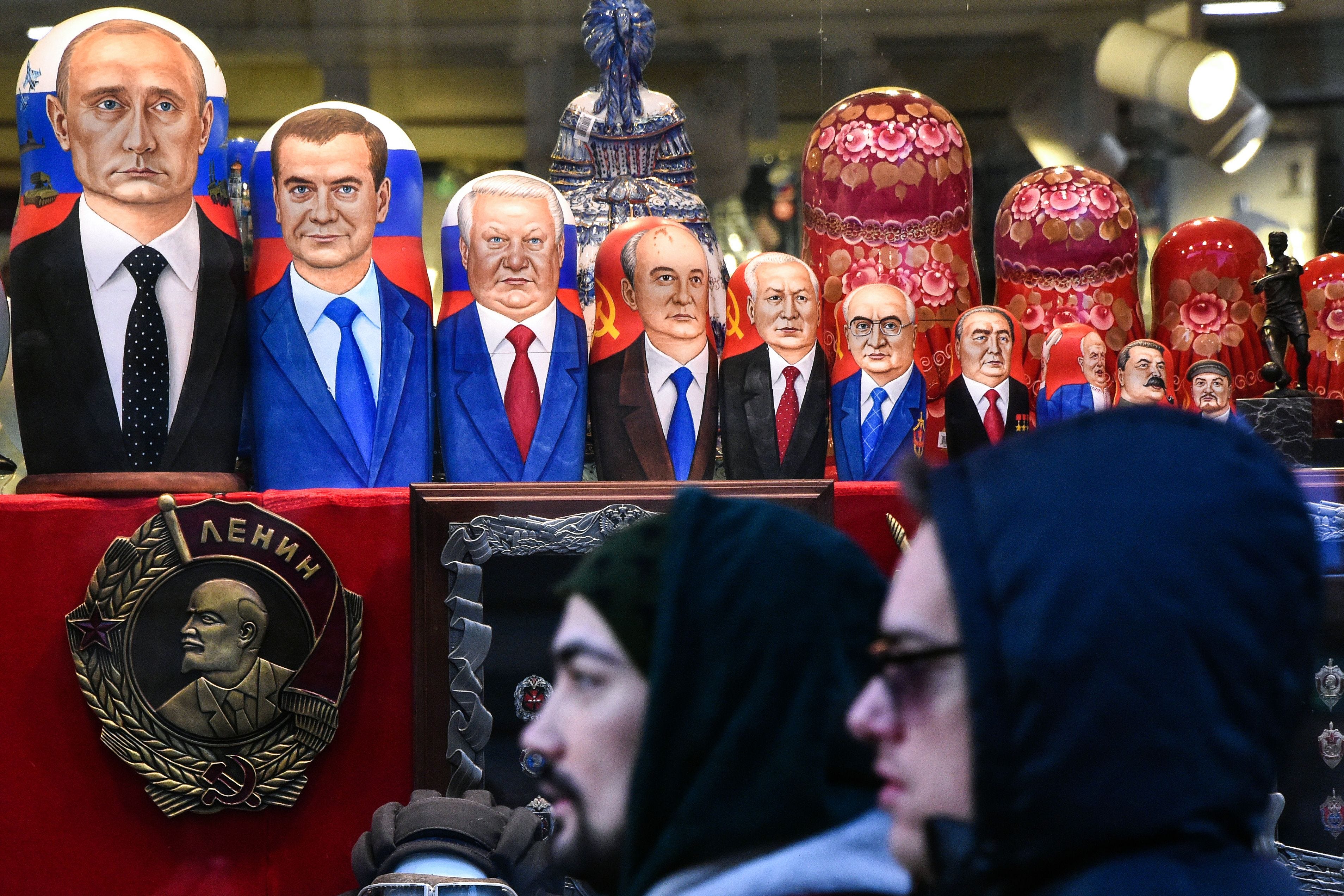








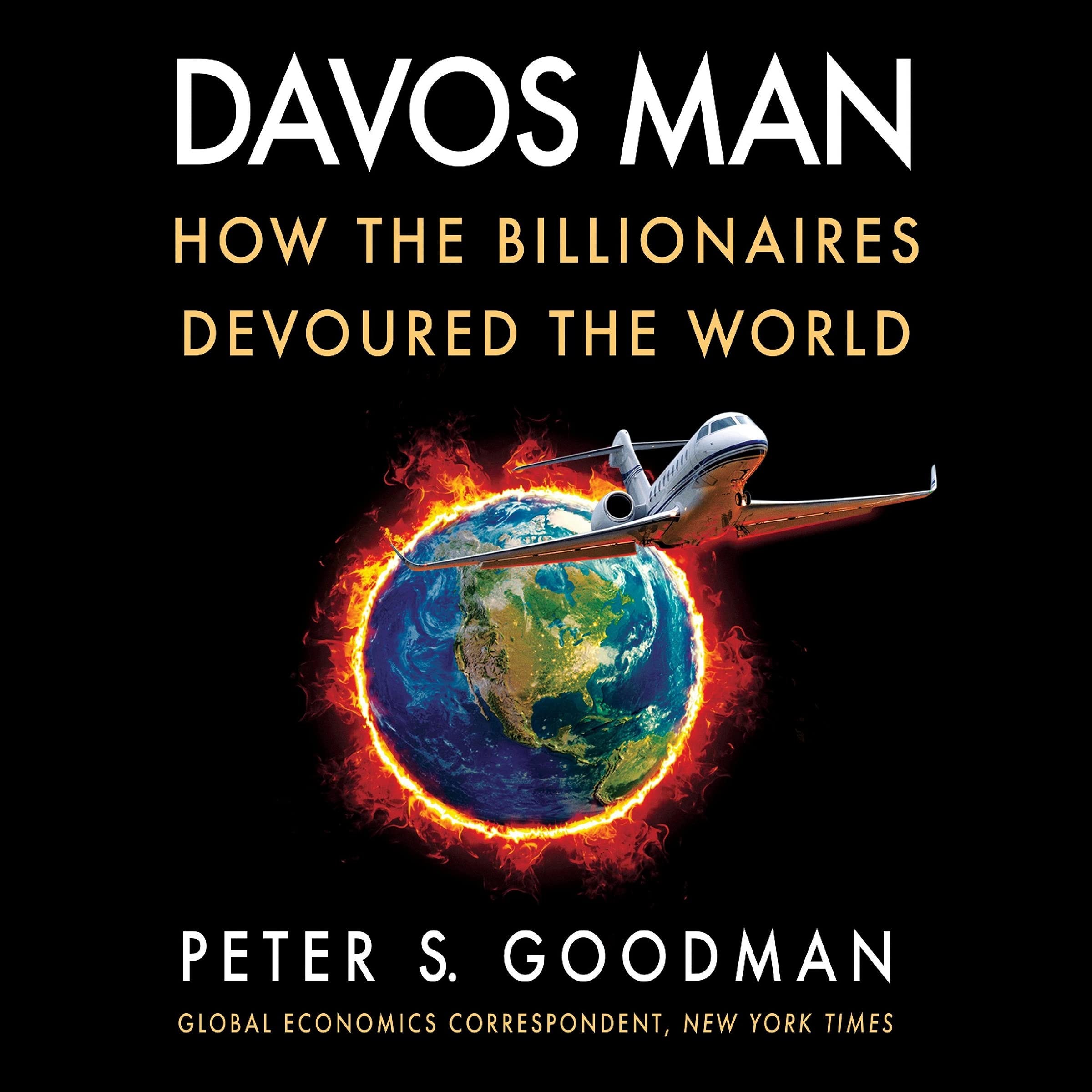
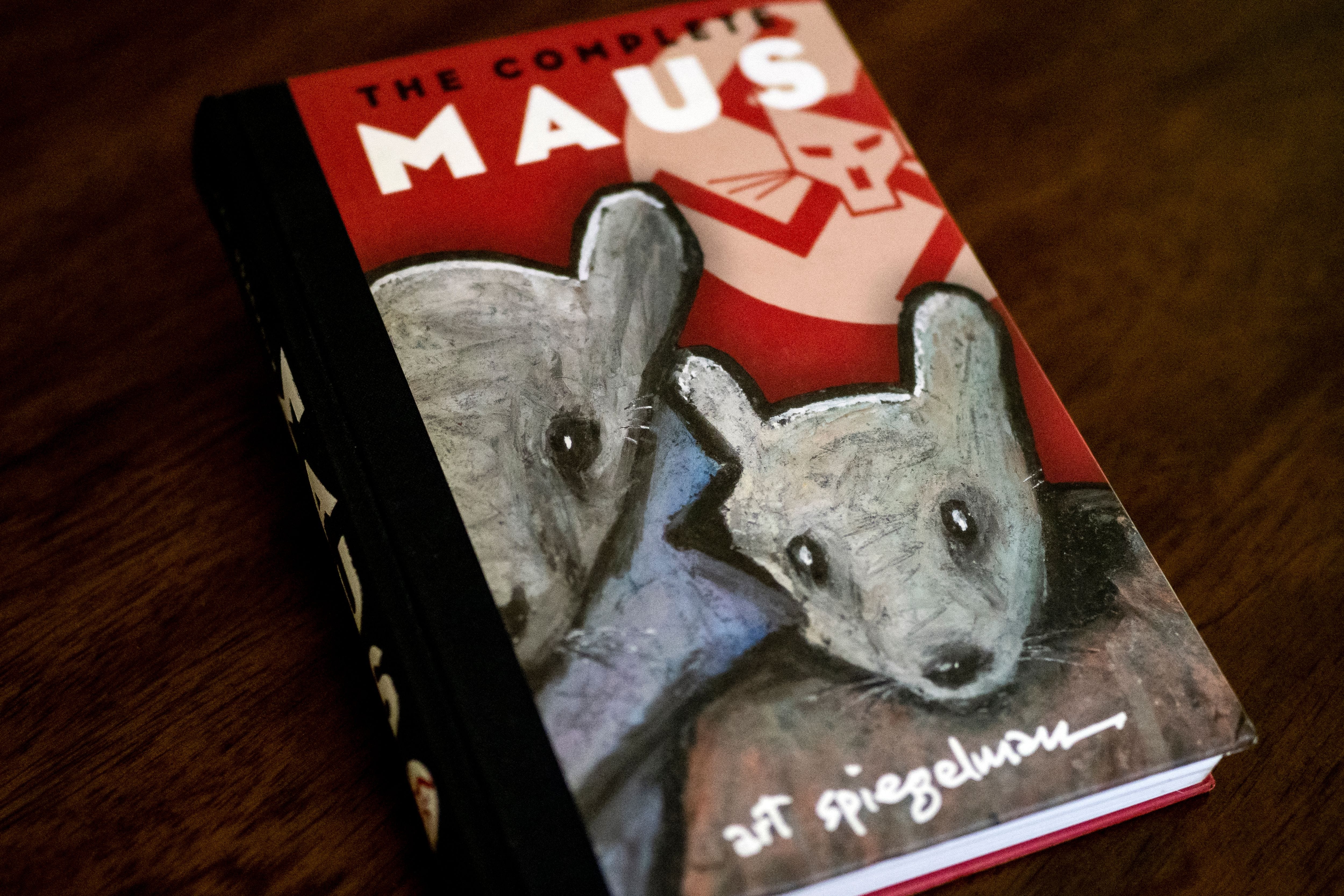
No episodes match that filter.